Why Your AC Keeps Tripping the Breaker
If your AC trips the circuit breaker every time it tries to start — or runs for a while and then trips — something is drawing more current than the circuit can handle. Resetting the breaker and hoping for the best isn’t the answer. The breaker is protecting your wiring from overheating, and the root cause will only get worse. Here are the most common reasons and which parts to check.
A Weak or Failed Capacitor
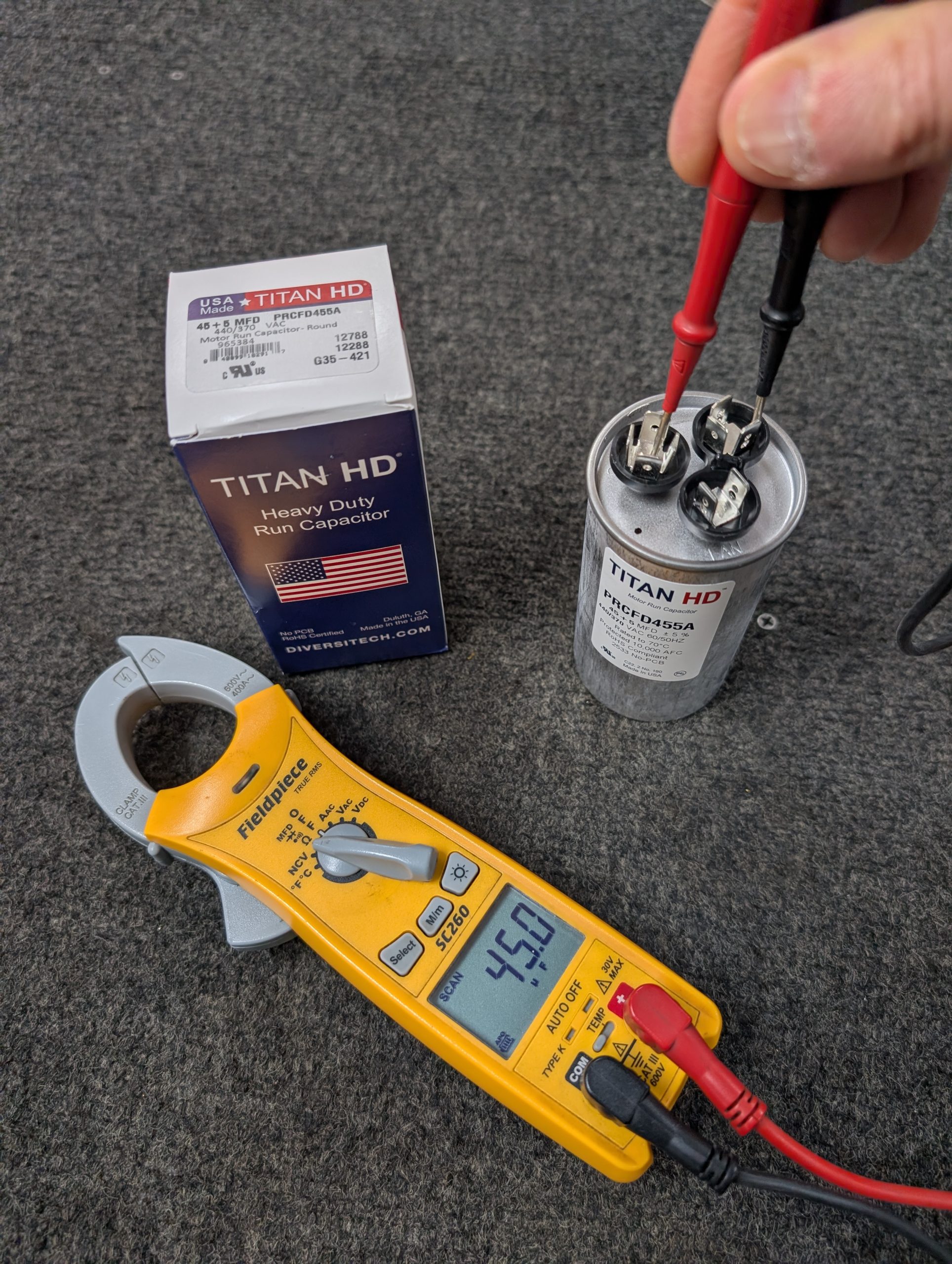
This is the most common cause we see at the counter, especially at the start of Dallas summers. When a run capacitor weakens, it can’t provide the compressor and fan motor with the startup boost they need. The motors draw excessive amps trying to compensate, and that extra current trips the breaker. A capacitor test takes 30 seconds at our counter — bring yours in before replacing anything more expensive.
A Failing Compressor
If the capacitor tests fine, the compressor itself may be drawing too much current. Worn bearings, internal mechanical wear, or shorted windings all increase the amp draw. You can check this with a clamp meter — compare the running amps to the RLA (rated load amps) on the unit’s nameplate. If it’s pulling significantly more than rated, the compressor is struggling. A hard start kit can sometimes extend the life of a compressor that’s hard-starting but not yet failed.
A Grounded Compressor or Motor
A “grounded” motor means the wire insulation inside the windings has broken down and is making contact with the motor housing. This creates a short circuit that trips the breaker immediately — often the moment you reset it. You can test for this with a multimeter set to ohms: touch one probe to each motor terminal and the other to the bare copper ground or the motor housing. Any continuity (low resistance reading) means the motor is grounded and needs to be replaced.
The Condenser Fan Motor
A seized or shorted condenser fan motor will also trip the breaker. If the fan won’t turn freely by hand (with power off), the bearings are locked up. If it spins freely but still trips the breaker when powered, the windings may be shorted. Either way, the motor needs to be replaced — running the system without the condenser fan causes the compressor to overheat rapidly.
Dirty Condenser Coils
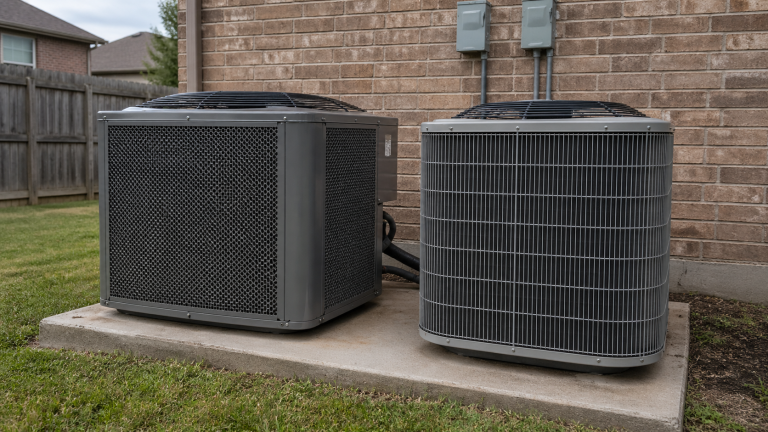
This one is easy to overlook. When the condenser coils are caked with dirt, grass clippings, and cottonwood fluff, the system can’t reject heat efficiently. The compressor runs longer and harder, pushing its amp draw higher. On the hottest days, that extra draw can be enough to trip the breaker. Rinse the coils with a garden hose (from inside out) before summer starts — it’s free and takes 10 minutes.
The Breaker Itself
Circuit breakers wear out over time, especially if they’ve tripped repeatedly. A weak breaker trips at a lower current than it should. If you’ve checked everything above and the amp draw looks normal, the breaker itself might need to be replaced. This is a job for an electrician — breaker panels carry lethal voltage.
What to Do Next
Start with the easiest, cheapest checks first: pull the capacitor and bring it in for a free test, inspect the condenser coils, and try spinning the fan by hand. If the capacitor is the culprit, you’re looking at a $10 to $30 fix. Even a fan motor replacement at $120 to $180 is far cheaper than the $500+ a service call would cost for the same diagnosis and repair.
Open To Public HVAC Parts — 10226 Plano Rd, Suite 104, Dallas, TX 75238. Call or text (214) 340-9421. Open Monday–Friday 10–7, Saturday 10–3.