Why Your AC Fails in Dallas Every Summer (And How to Prevent It)

If your AC has died on a 100-degree July afternoon in Dallas, you’re not alone. We see the same pattern at our counter every single summer — capacitors fail first, contactors second, motors third, and the calls flood in once the temperature crosses 95°F for three days running.
This is a Texas-specific problem, and it’s mostly preventable. Here’s what’s actually breaking inside your outdoor unit when DFW hits triple digits, and how to keep it running through the worst of the season.
Why Summer Hits HVAC Equipment Harder in DFW Than Other Markets
Dallas-Fort Worth doesn’t just get hot — it stays hot for stretches that punish electrical components. A condenser that runs 8 hours a day in Atlanta might run 14+ hours a day here in July. Every hour of compressor run-time is an hour of capacitor charge cycles, contactor arcing, and motor bearing wear.
Three environmental factors make DFW especially rough on HVAC parts:
- Sustained heat. July and August routinely run 100°F+ for two-week stretches. Your condenser fan and compressor never get a real break.
- High dew points. Humidity loads the indoor coil heavily, increasing system run time and putting stress on the blower motor and capacitor.
- Hail and dust. Spring storms damage condenser fins. Construction dust on summer winds clogs filters and reduces airflow, which makes the system work harder.
What Fails First (and Why)
After 27 years selling parts in Dallas, the failure pattern is remarkably consistent.
1. Capacitors (60% of summer calls)
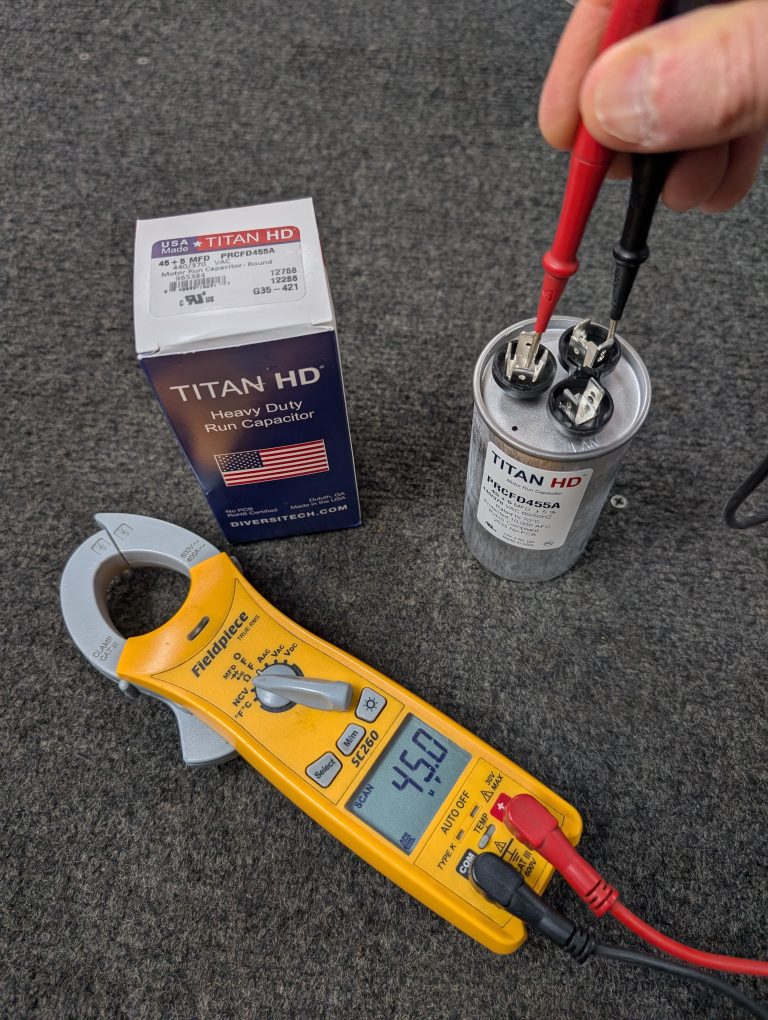
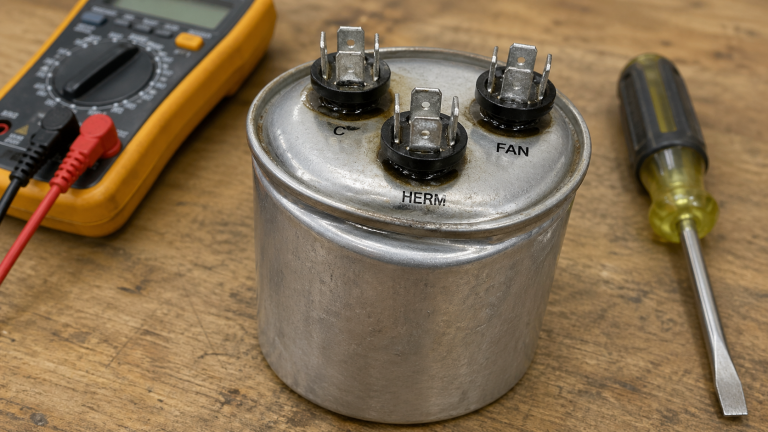
The dual-run capacitor on your outdoor unit takes the most abuse. It cycles every time the compressor or fan starts, and heat dramatically shortens its lifespan. A capacitor rated for 60,000 cycles in mild weather might only last 30,000 cycles when it’s running at 110°F internal cabinet temp. Symptoms: AC won’t start, fan runs but no cooling, humming sound, capacitor visibly bulged or leaking. Diagnostic guide here.
2. Contactors
The contactor is the relay that powers the compressor. Each cycle creates a tiny electrical arc, and over time the contact points pit and burn. By July of year 5-7, most contactors look pretty rough. A failing contactor causes intermittent cooling, clicking, or a system that won’t shut off. We stock contactors for every common system.
3. Condenser Fan Motors
If your outdoor fan stops spinning during a 100° day, the high-pressure switch trips and the system shuts down to protect the compressor. Bearing wear from constant run-time is the usual culprit. Symptoms and fixes here.
4. Frozen Indoor Coils
This isn’t a part failure — it’s a symptom of restricted airflow (dirty filter, blocked return) or low refrigerant. The indoor coil freezes, the system stops cooling, and most homeowners think the AC is “broken.” It’s not. Walk-through here.
Five Things You Can Do This Spring to Avoid the July Breakdown
- Replace your filter. Cheapest preventive maintenance you can do. Restricted airflow is the single biggest cause of summer AC failures we see.
- Hose off the outdoor coil. Spring pollen and winter debris clog the fins. Spray from the inside out with a regular garden hose — no pressure washer.
- Test your capacitor. A multimeter with a capacitance setting reads the actual µF value. If it’s more than 6% off the printed spec, replace it now while it’s 75°F instead of after it strands you in 105° heat. We test capacitors free at the counter.
- Listen for early symptoms. Humming on startup, slow fan spin-up, intermittent cooling on hot afternoons — these are warnings the capacitor or contactor is on its last legs.
- Stock spares before summer. If your system is over 7 years old, keep a matching capacitor and contactor on the shelf. The day they fail, you don’t want to be hunting for parts at 9 PM.
If Your System Is Already Failing in Spring
If you’re seeing symptoms now — short cycling, weak airflow, warm air on hot days — fix it before May. Parts run $25–$80 for the most common failures, and we test them free at the counter on Plano Road. If your compressor is shot or your coil is leaking R-22, you’re looking at a complete system replacement instead, but most of what’s “broken” in May is actually a $40 part.
Walk in or call (214) 340-9421. Mon–Fri 10 AM–7 PM, Sat 10 AM–3 PM. We’ll diagnose it, match the part, and test the new one before you leave. No appointment needed.