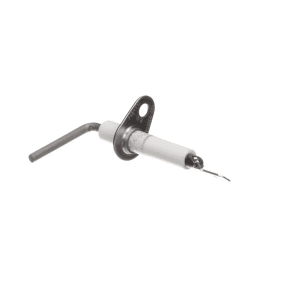
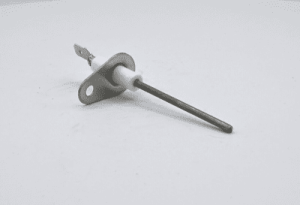
S1-2702-311P – FLAME SENSOR (YORK)
Read microamps before and after you clean, with the meter in series on the DC microamp range. If a cleaned rod reads a steady 4 to 6 microamps and the furnace still drops out, the trouble is the ground or the flame, not the sensor. Shut off the breaker before you pull the rod. Clean with a scouring pad or a dollar bill, never sandpaper, and note which way the bend faces before it comes out so it goes back into the same spot in the flame.
10226 Plano Rd, Suite 104, Dallas TX 75238
Questions? Call or text (214) 340-9421
Mon–Fri 10 am – 7 pm | Sat 10 am – 3 pm
York / Coleman / Evcon OEM flame sensor. Johnson Controls does not publish public specification sheets or cross-references for its York and Source 1 service parts, so no temperature rating, set point or amperage is listed here. Parts in this group are safety controls – match the part number exactly rather than substituting by appearance, and confirm the rating stamped on the original before installing.
Replaces the earlier revision S1-2702-311. Always match the full model and serial number on your unit before ordering.
Specs
- OEM brandYork / Coleman / Evcon (Johnson Controls)
- Part numberS1-2702-311P
- Product typeFlame sensor
- Temperature / set point ratingNot published by the OEM - read the marking on the part
- Electrical ratingNot published by the OEM
- Availability noteCurrent OEM service part
- Data SourceOTP stock record - not manufacturer-verified
Cross-reference numbers
This part replaces the following OEM and aftermarket numbers:
- S1-2702-311P
Not sure if your number matches? Call (214) 340-9421 or bring the old part in — bench-testing is free.
Fits these models
- GF8075B12MU11A
- GF8100C16MU11A
- GF8100D20MU11A
- FG8B07512MU11A
- G8C07512MUB11A
- G8C07516MUC11A
- L8C10016MUC11A
- BGM10016BXU
- 6MG03
How does a flame sensor work?
The board puts a small AC voltage on the rod and uses the flame itself as a conductor to ground through the burner. Because the grounded burner is far larger than the rod, current flows mostly one direction, so the board reads DC microamps and knows there is real fire. Most furnaces land somewhere between 2 and 6 microamps, and boards typically drop out below about 1.
What should I clean it with?
A nylon scouring pad, fine steel wool, or a folded dollar bill. Skip the sandpaper and emery cloth - the grit they leave behind bakes onto the rod and puts you right back where you started. And no, there is no factory coating on a flame rod that cleaning ruins. That myth gets repeated constantly and it is not true.
I cleaned it and it still drops out after five seconds. Now what?
Look past the rod. Check the ground, from the burner assembly back to the board common, because rectification needs a solid one. Then look for a hairline crack in the white porcelain insulator, a rod bent out of the flame or shoved too deep into it, and a lazy or lifting flame caused by a plugged burner port or low manifold pressure.
Do I need the exact part?
Rod length, bend, and bracket all matter, because the tip has to sit in the same part of the flame. Bring the old one in and we will lay it beside what we stock.
- Low Stock
 York
YorkS1-02530801000 - FLAME SENSOR (YORK)
SKU · S1-02530801000$61.56View details → - Out of StockRheem
62-24044-71 - FLAME SENSOR RETROFIT KIT (RHEEM)
SKU · 62-24044-71$66.81View details → - In Stock
 Goodman
0130F00010 - FLAME SENSOR (GOODMAN, FACTORY)
SKU · 0130F00010$22.54View details → - Low Stock
 Supco
SupcoTH198018 - THERMOCOUPLE (18")
SKU · THERMOCOUPLE18$15.28View details →