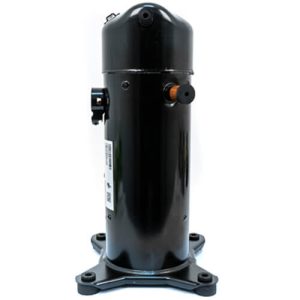
PP-COM-LEADS-8 – COMPRESSOR LEAD KIT
Heat-shrink butt connectors are the right call inside a condenser, but they only seal if you actually bring them up to temperature - 180 C / 356 F, which is hotter than most techs run a heat gun. Work the flame or gun around the whole barrel until adhesive beads out both ends. A connector that has shrunk but not flowed adhesive will pass a megger today and fill with water by August.
10226 Plano Rd, Suite 104, Dallas TX 75238
Questions? Call or text (214) 340-9421
Mon–Fri 10 am – 7 pm | Sat 10 am – 3 pm
Compressor lead kit supplying pre-terminated leads for wiring compressor terminals. No manufacturer-published literature was found for this part number, so wire gauge, lead length and terminal size are not stated here. Confirm lead length, gauge and terminal size against the compressor before installing.
Specs
- BrandPRO*PARTS
- Part NumberPP-COM-LEADS-8
- TypeCompressor hook-up lead kit
- Wire Gauge10 AWG THHN
- Lead Length8 in
- Contents3 leads, 3 heat-shrinkable butt connectors
- Connector Wire Range22 - 8 AWG
- Voltage Rating600 V
- Shrink Temperature180 C (356 F)
- SealEnvironmentally sealed
How do I tell a burnout from a mechanical failure?
Ohm the terminals out of circuit. Common to start plus common to run should add up to run to start, and an OL reading on any pair means an open winding. Then check each terminal to the shell with the meter on a manual range, because any continuity to ground condemns it. Do not use a megger to condemn a modern scroll. If the oil smells acrid and an acid test comes back positive, you have a burnout rather than a stuck rotor.
What does a burnout require beyond the compressor?
A full cleanup, because acid and carbon are now in the lineset and the evaporator. Flush the system, install a new liquid line filter drier every time, and add a temporary 100 percent activated alumina suction line drier that comes back OUT after about 72 hours of run time. Replace the accumulator if the unit has one, since the oil return orifice plugs with debris. Copeland also calls for inspecting the contactor for pitted contacts and replacing the run capacitor on single phase units.
Why bother figuring out why the old one failed?
Because the compressor is usually the victim. Overheating from a dirty condenser or low charge, liquid floodback from a flooding metering device or a dead crankcase heater, lost lubrication from bad piping, and single phasing from a welded contactor or failed capacitor all kill compressors. Bolt a new one onto the same problem and you buy two.
Will a hard start kit save a weak compressor?
Only where the manufacturer calls for one. On a compressor failing for another reason it masks the symptom for a few weeks, and a potential relay left in circuit on the wrong application becomes its own failure.
- Low Stock
 LG
LGSQA026KAZ - COMPRESSOR (22)
SKU · SQA026KAZ$981.24View details → - Low StockBrinmar
SBUHD - COMPRESSOR SOUND BLANKET
SKU · SBUHD$96.25View details → - Low Stock
 LG
LGAPG025KAC - SCROLL COMPRESSOR (R410A, 2.5 TON, LG, FITS COPELAND ZP SERIES)
SKU · 55-107225-211$1,191.19View details → - Low StockLG
ABG036KAC - SCROLL COMPRESSOR (R410A, 3.5 TON, LG, FITS COPELAND ZP SERIES)
SKU · ABG036KAC$1,265.06View details →