AR-B – ACETYLENE REGULATOR
Soap every connection when you change a tank, and do it before the striker comes out. A fitting that whistles is one you only hear after it is already burning. Leak-check acetylene with soap solution, never with a flame, and never run the regulator past 15 psig. Keep the tank upright and chained in the cart, and if it came to the job on its side, let it stand half an hour before you light off. We exchange acetylene, oxygen and nitrogen at the counter.
10226 Plano Rd, Suite 104, Dallas TX 75238
Questions? Call or text (214) 340-9421
Mon–Fri 10 am – 7 pm | Sat 10 am – 3 pm
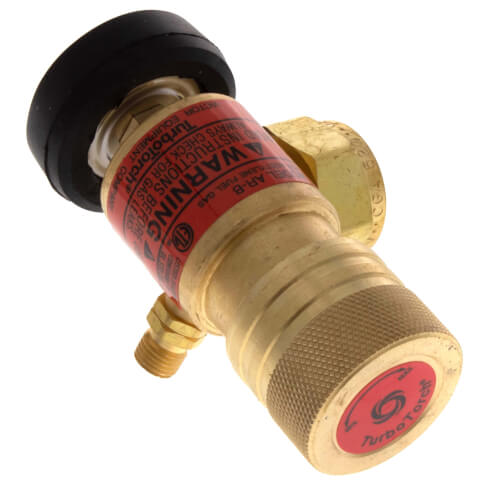
TurboTorch AR-B acetylene regulator, factory part number 0386-0725. It mounts to a CGA-520 “B” acetylene cylinder and is the regulator TurboTorch specifies for its air-acetylene torch kits and swirl handles.
Specifications taken from the manufacturer’s published product literature.
Specs
- BrandTurboTorch
- Factory part no.0386-0725
- Cylinder connectionCGA-520 ("B" tank)
- GasAcetylene
- TypeSingle-stage torch regulator
Cross-reference numbers
This part replaces the following OEM and aftermarket numbers:
- X003BTQXWH
- 0386-0725
Not sure if your number matches? Call (214) 340-9421 or bring the old part in — bench-testing is free.
How do I pick a tip size?
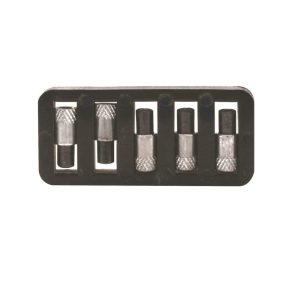
By the tube diameter, off the manufacturer's chart, not by whatever is already screwed on the handle. TurboTorch Extreme air-acetylene silver-braze ranges run A-2 for 1/8 to 1/4 inch, A-3 for 1/8 to 1/2, A-5 for 1/4 to 3/4, A-8 for 1/2 to 1, A-11 for 7/8 to 1-5/8 and A-14 for 1 to 2 inch. A tip that is too small never brings the joint up to temperature and you scorch the copper trying. Too big and you overheat the fitting before the alloy ever flows.
Does a bigger tip burn hotter?
No, and this myth costs people joints. Flame temperature is a property of the fuel and air mixture, not the tip. A bigger tip delivers more BTU per minute, so it heats more mass faster. If a joint will not come up to heat you need more BTU or less heat sinking, not a higher regulator setting.
How much acetylene can I draw at once?
No more than about 1/7 of the cylinder's capacity per hour. An MC cylinder holds roughly 10 cubic feet, so about 1.4 CFH. A B tank at 40 cubic feet gives you about 5.7 CFH. Acetylene is dissolved in acetone inside a porous filler, and pulling it too fast drags acetone out with the gas - you get a lazy flame, gummed tips and a cylinder that quits feeding. Stay inside the regulator's 2 to 15 psig delivery range and never go above 15 psig.
Do the cylinders really have to stand upright?
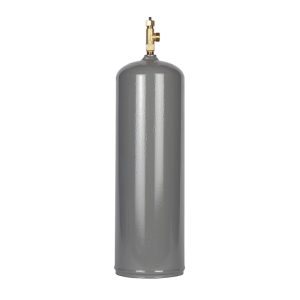
Yes, in use and in storage, chained or in a cart. On its side the acetone migrates. If a tank rode to the job lying down, stand it up at least 30 minutes before you light it - an hour is better.
- In Stock
 Harris
SILVER - 5% - 1LB - BRAZING RODS (BCuP3)
SKU · BCuP-3$126.19View details → - In StockUniweld
FL37 - FLINT ROUNDS
SKU · FL37$7.86View details → - In StockUniversal
B ACETYLENE BOTTLE- EMPTY FOR PURCHASE - 40CU.FT.
SKU · ACET-B$189.00View details → - Low StockRefrigeration Technologies
RT400P - HEAT BLOCKING COMPOUND (12 OZ)
SKU · RT400P$32.99View details →