MW10 – MAG WHEEL (MAGNETIC ACETYLENE KNOB)
An acetylene valve should never be opened more than about one turn - that is not a rule of thumb, it is so you can shut the cylinder fast if something goes wrong. The Mag Wheel makes that easy to do consistently because the knob stays put instead of living in the bottom of the bag. When you swap cylinders, pull it off and take it with you; it is yours, not the gas supplier's.
10226 Plano Rd, Suite 104, Dallas TX 75238
Questions? Call or text (214) 340-9421
Mon–Fri 10 am – 7 pm | Sat 10 am – 3 pm
ESP MW10, The Mag Wheel. A rare-earth magnetic knob that sticks to the top of an acetylene cylinder so the valve can be opened and closed without hunting for a tank wrench. It lifts off and moves to the next bottle when the cylinder is swapped, so it stays with you rather than with the gas supplier.
Specs
- BrandESP (Energy Saving Products)
- Part NumberMW10
- ProductThe Mag Wheel
- TypeMagnetic acetylene cylinder knob
- MagnetRare earth
- UseOpens and closes the acetylene tank valve without a tank wrench
- ReusableTransfers from tank to tank
How do I pick a tip size?
By the tube diameter, off the manufacturer's chart, not by whatever is already screwed on the handle. TurboTorch Extreme air-acetylene silver-braze ranges run A-2 for 1/8 to 1/4 inch, A-3 for 1/8 to 1/2, A-5 for 1/4 to 3/4, A-8 for 1/2 to 1, A-11 for 7/8 to 1-5/8 and A-14 for 1 to 2 inch. A tip that is too small never brings the joint up to temperature and you scorch the copper trying. Too big and you overheat the fitting before the alloy ever flows.
Does a bigger tip burn hotter?
No, and this myth costs people joints. Flame temperature is a property of the fuel and air mixture, not the tip. A bigger tip delivers more BTU per minute, so it heats more mass faster. If a joint will not come up to heat you need more BTU or less heat sinking, not a higher regulator setting.
How much acetylene can I draw at once?
No more than about 1/7 of the cylinder's capacity per hour. An MC cylinder holds roughly 10 cubic feet, so about 1.4 CFH. A B tank at 40 cubic feet gives you about 5.7 CFH. Acetylene is dissolved in acetone inside a porous filler, and pulling it too fast drags acetone out with the gas - you get a lazy flame, gummed tips and a cylinder that quits feeding. Stay inside the regulator's 2 to 15 psig delivery range and never go above 15 psig.
Do the cylinders really have to stand upright?
Yes, in use and in storage, chained or in a cart. On its side the acetone migrates. If a tank rode to the job lying down, stand it up at least 30 minutes before you light it - an hour is better.
- Low Stock
 TechGas
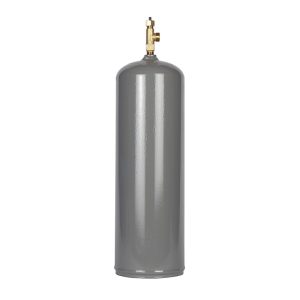
ACETYLENE-B-REFILL - GAS CONTENTS (40 CU.FT.) - CHECK CONTENTS BEFORE YOU LEAVE - REVISE EL CONTENIDO ANTES DE MARCHARSE
SKU · 40ACIC$48.46View details → - In StockTechGas
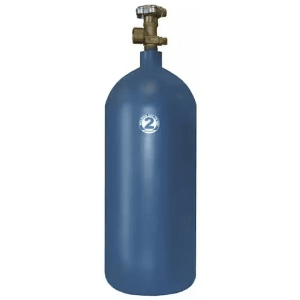
NITROGEN-REFILL - GAS CONTENTS (40 CU.FT.) - CHECK CONTENTS BEFORE YOU LEAVE - REVISE EL CONTENIDO ANTES DE MARCHARSE
SKU · 40NIC$26.29View details → - Low StockRefrigeration Technologies
RT400P - HEAT BLOCKING COMPOUND (12 OZ)
SKU · RT400P$32.99View details → - In Stock
 Highside Chemicals
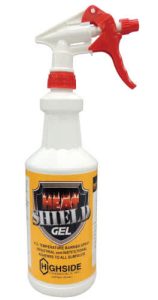
HS31032 - HEAT SHIELD GEL (32 OZ)
SKU · HS31032$18.12View details →