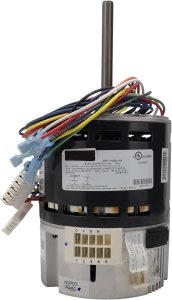
622686 – ECM BLOWER MOTOR (NORTEK, PWM, PROPRIETARY HARNESS)
Nortek/Intertherm ECM blowers use a proprietary PWM harness that does NOT cross-reference to GE/Genteq universal motors. Bring the old motor — we'll verify the harness pinout at the counter. Before condemning the motor, check the control board PWM output and the 24V signal; a bad board causes 'dead motor' symptoms more often than a failed motor.
10226 Plano Rd, Suite 104, Dallas TX 75238
Questions? Call or text (214) 340-9421
Mon–Fri 10 am – 7 pm | Sat 10 am – 3 pm
Symptoms of failure
- Outdoor fan will not spin at all
- Fan spins slowly, or only starts if you nudge it
- Loud grinding, humming or squealing from the outdoor unit
- AC runs but the house will not cool down
- Motor housing is too hot to touch
- System keeps tripping on high pressure and needing a reset
Seeing these does not always mean this part is the culprit. Bring the old one in and we will meter it at the counter, free, before you buy.
If your indoor unit runs but produces weak or no airflow, the blower motor may need replacement. This Nortek-specific ECM has a proprietary wiring harness — NOT a universal motor. Verify your part number before purchasing.
Specs: 1/2 HP, 1050 RPM, 208-230V, 48-frame, ECM variable speed, PWM control, proprietary Nortek harness
Replaces: 622686, 622686R, E7EM-015H2
Fits: Nortek air handlers (includes Frigidaire, Gibson, Nordyne, Westinghouse brands using Nortek components)
Need help? See our AC Fan Not Spinning Guide.
In stock at Open To Public HVAC Parts in Dallas. We test parts at the counter before you buy. Call or text (214) 340-9421.
Specs
- TypeNortek-platform ECM blower motor
- ControlVariable / constant-torque ECM
- Frame48Y
- Motor ModelZWK702B5388701 (Broad-Ocean)
Installing it yourself
- Kill power at the outdoor disconnect and confirm 0V before touching anything.
- Discharge the run capacitor. It holds a charge even with the power off.
- Photograph the wiring and the fan blade height before you take anything apart.
- Pull the fan blade off the shaft. The nut is often reverse-threaded.
- Unbolt the motor from the fan grille, usually four bolts.
- Match HP, RPM, frame, shaft diameter and rotation. RPM matters - 1075 and 825 are different jobs.
- Mount the new motor, set the blade back to the same height, reconnect by wire color.
- Replace the run capacitor at the same time. A weak cap is usually what killed the last motor.
Power off at the disconnect first, every time. Not sure partway through? Bring it to the counter and we will walk it with you.
Cross-reference numbers
This part replaces the following OEM and aftermarket numbers:
- 622686
- 622686R
Not sure if your number matches? Call (214) 340-9421 or bring the old part in — bench-testing is free.
Fits these models
- Direct replacement for Nortek / Intertherm / Maytag / Frigidaire ECM blower motors with proprietary PWM harness
- Common applications: Nortek-platform 90%+ AFUE gas furnaces and air handlers
- Does NOT cross over to GE/Genteq universal ECM motors — Nortek uses a proprietary connector and signal protocol
- Nordyne E7EM-015H2
What's the difference between 5860 / 2.0 / 2.3 / EON?
These are GE/Genteq ECM motor generations. 2.0 = first-gen variable speed (1990s-2000s); 2.3 = newer, more reliable; EON = newest tier with built-in diagnostics. They share the 16-pin harness and PWM control protocol — the 5860 universal kit covers all three.
Will this fit my Trane, Carrier, or Goodman variable-speed furnace?
If your existing motor is a GE/Genteq 2.0, 2.3, or EON with a 16-pin connector and PWM control from the board — yes. Nortek/Intertherm proprietary harnesses do NOT cross over. Bring the old motor in if you're unsure.
How do I program the dip switches?
Match the new motor's CFM/torque settings to your tonnage and air handler model. The harness label inside the motor has the dip-switch chart. If yours is missing or faded, look up your air handler's installation manual.
Will an ECM motor lower my power bill?
True variable-speed ECM (this one) runs at lower watts during long, low-demand cycles — typically 25-40% less than a comparable PSC. Best savings come from running fan-only or first-stage cooling for longer, gentler cycles.
- Low Stock
 Century
EM3467 - BLOWER MOTOR - AIR HANDLER (3/4 HP, 240V, 10MFD)
SKU · EM3467$195.46View details → - Low Stock
 Trueline
W51-MHBDV-04 - BLOWER MOTOR - ECM X13 - CONSTANT TORQUE (1/2-1/3 HP, DUAL VOLTAGE)
SKU · 5632$379.00View details → - Out of StockPhoto coming soon
0131M01003S - ECM MOTOR/MODULEGoodman0131M01003S - ECM MOTOR/MODULE
SKU · 0131M01003S$515.66View details → - In StockTrueline
W51-11BDV-04 - BLOWER MOTOR - ECM X13 - CONSTANT TORQUE (1 HP, DUAL VOLTAGE)
SKU · 5652$429.00View details →