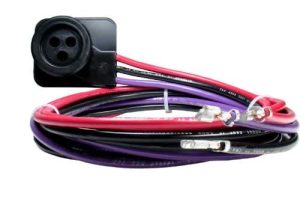
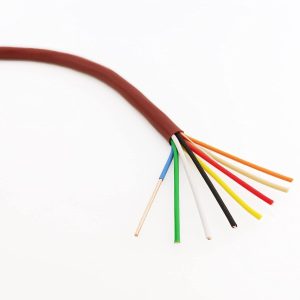
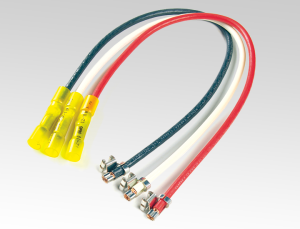
18/5TSTATWIRE – 1FT – THERMOSTAT WIRE – FIVE WIRE
Pull 18/8 on any new run even if you only need five conductors today. The extra pairs cost a few dollars and save opening a wall when a smart stat or a second stage shows up later. Grommet the cable everywhere it passes through sheet metal. A thermostat wire rubbed through on a knockout edge is the most common reason a 24V board fuse blows, and the board gets blamed for it almost every time. Remember thermostat cable is Class 2, so it never carries line voltage.
10226 Plano Rd, Suite 104, Dallas TX 75238
Questions? Call or text (214) 340-9421
Mon–Fri 10 am – 7 pm | Sat 10 am – 3 pm
18 AWG two-conductor thermostat wire, sold by the foot. Cut to the length you need for low-voltage control runs.
Specifications from our own stock records. The manufacturer does not publish a public page for this item.
Specs
- TypeThermostat / low-voltage control wire
- Gauge18 AWG
- Conductors2
- Sold asPer foot
- Data SourceOTP stock record - not manufacturer-verified
How many conductors do I need?
Count terminals, then add spares. A gas furnace with cooling and a C wire needs five, for R, Y, G, W and C. A single-stage heat pump with auxiliary heat needs six or seven once you add O/B and E or W2. Two-stage or dual fuel wants eight. We stock 18/2 through 18/8, and the honest advice is to pull 18/8 on any new run. The wire is cheap and the wall is not going back open for free.
Solid or stranded?
Standard thermostat cable is 18 gauge solid copper, and that is what you want for a fixed run from the air handler to the wall. It lands cleanly in screw and push terminals and holds its shape in a cavity. Stranded belongs where things flex or vibrate, like a jumper in a cabinet or a lead to a damper motor. Skip copper-clad bargain cable. It reads fine on a meter and gives you a bad terminal a year later.
Can I use thermostat wire for the 240 volt side?
Never. Thermostat cable is Class 2 power-limited cable under NEC Article 725. It is not a branch circuit conductor and it is not rated for line voltage no matter what the jacket says. Line voltage from the disconnect to the unit goes in a listed whip or in conduit with properly sized conductors. Do not run the low voltage through that same whip either, because it is a code problem and it induces noise on your control signals.
Does run length matter?
Past about 100 feet it does, especially on 24 volt loads pulling real current. Long thin runs drop voltage and give you contactors that hum instead of pulling in. At 150 feet or more, go to 16 gauge or put a relay near the load. And protect the cable at every sheet metal pass with a grommet. That one detail is behind most blown board fuses we see.
- Low Stock
 Copeland
45-100834-80 - COMPRESSOR PLUG (COPELAND, 10 AWG, 6')
SKU · 45-100834-80$36.59View details → - In Stock
 Southwire
JP20-8 - THERMOSTAT WIRE ROLL (20 AWG, 8 WIRE, 125')
SKU · JP20-08$66.23View details → - In StockUniversal
PBT - PIGGYBACK TERMINALS (TWO MALE TERMINALS, 1 PIGGYBACK, 20 PACK)
SKU · PIGGYBACK$7.99View details → - Low Stock
 Totaline
P298-LEADS-8 - LEAD KIT
SKU · P298-LEADS-8$18.00View details →