VT3/8-100 – VINYL TUBING (100′)
Put in a cleanout tee with a threaded plug just above the trap, on purpose, the first time. It costs about a dollar and it is the difference between vacuuming a drain in five minutes and cutting glued PVC in a 140 degree attic in August. Primer plus cement on every joint, 1/8 inch of fall per foot minimum, and no bleach down the line - most manufacturers warn against it because of what it does to the pan and the sheet metal around it.
10226 Plano Rd, Suite 104, Dallas TX 75238
Questions? Call or text (214) 340-9421
Mon–Fri 10 am – 7 pm | Sat 10 am – 3 pm
Vinyl tubing, 3/8 in., in a 100 ft coil. Used for condensate drain runs and general shop and jobsite work.
Specifications from our own stock records. The manufacturer does not publish a public page for this item.
Specs
- TypeVinyl tubing
- Size3/8 in.
- Length100 ft
- Data SourceOTP stock record - not manufacturer-verified
What size and slope does a condensate drain need?
3/4 inch minimum, and never smaller than the pan fitting itself. The mechanical code treats 3/4 inch as good to 20 tons, so on a house the size is rarely the problem - the slope is. You need 1 percent minimum, which is 1/8 inch of fall per foot of run, and 1/4 inch per foot is better. Every flat or backward stretch becomes a sediment trap first and a clog second.
Why does the trap matter?
Because a draw-through air handler has its blower downstream of the coil, so the pan sits under negative pressure. With no trap the unit pulls air up the drain line and water stops moving even though the pipe is wide open. Trap it per the equipment instructions with enough seal depth to beat that negative pressure, then vent after the trap so it cannot siphon itself dry.
Do I really need a cleanout tee?
Every time. A tee with a threaded plug above the trap lets you put a shop vac or a bottle of water on the line without cutting PVC. In Dallas a 3 ton system in August throws several gallons of condensate a day, so that line is going to need service, and a float switch tripping on a plugged drain is one of the most common AC quit calls we hear all summer.
Primer on every joint?
Yes. Primer softens the surface so the cement can chemically weld the two parts together. Cement alone on a glossy unprimed socket makes a joint that looks perfect and weeps under a slow constant drip. And skip the bleach - a lot of equipment makers specifically warn against it for what it does to the pan and the surrounding metal. Use pan tablets or a hot water flush.
- In Stock
 Universal
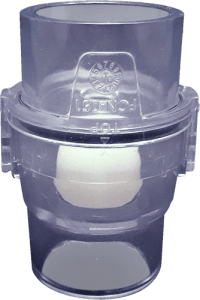
FCN - WATERLESS AIR TRAP (P-TRAP UPGRADE)
SKU · FCN$27.85View details → - In Stock
 Venti
Venti3/4PVCCAP - PVC PIPE (3/4", CAP, SCH 40, SLIP FITTING)
SKU · 3/4PVCCAP$0.68View details → - In Stock
 Venti
Venti3/4PVC90 - PVC FITTING (3/4", 90° ELBOW, SCH 40)
SKU · 3/4PVC90$0.85View details → - In Stock
 ESP
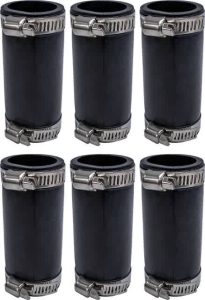
ESPFLEXCON34 - FLEXIBLE RUBBER COUPLING
SKU · FLEXCON-BULK$6.99View details →