TR28 – CONDENSATE PAN PROTECTOR (UP TO 2 TON)
Match the strip to the tonnage, not to the pan size. TR28 covers up to 2 tons; going bigger than the system needs does not extend the six months, it just puts more active into the condensate line. And a pan protector is maintenance, not a repair - if the pan is already slimed over or the trap is plugged, clear it first, then drop the strip in so it has clean water to work on.
10226 Plano Rd, Suite 104, Dallas TX 75238
Questions? Call or text (214) 340-9421
Mon–Fri 10 am – 7 pm | Sat 10 am – 3 pm
ACE Chemical TR28 condensate pan protector, sized for systems up to 2 tons. A controlled-release strip that sits in the drain pan and works for up to six months, holding back the mildew, fungi, bacteria, algae and slime that block a condensate line, and carrying odour counteractants for the smell that comes with them. EPA Reg. No. 68114-1-7909. Larger tonnages take the TR65, TR150 and TR300.
Specs
- BrandACE Chemical
- Part NumberTR28
- TypeControlled-release condensate pan treatment
- CapacityUp to 2 tons
- Service LifeUp to 6 months
- EPA Reg. No.68114-1-7909
- ControlsMildew, fungi, bacteria, algae, slime
- OdorContains odor counteractants
- Case Pack100
- Larger SizesTR65 (5 ton), TR150 (10 ton), TR300 (25 ton)
Is a big 100-piece tool kit a good way to start?
Not for the tools you actually touch all day. Buy the handful you reach for fifty times a week by fit and feel, and let a cheap set cover what you use twice a year. The ones that earn their spot in a service bag are a 1/4 inch and a 5/16 inch nut driver (that pair opens almost every panel on a Rheem, Trane or Goodman), a sharp tube cutter, a ratcheting service wrench with 3/16, 1/4, 5/16 and 3/8 square drives, a fin comb, a stubby driver for tight blower decks and a magnetic bit holder.
What is wrong with the flaring tool in a cheap kit?
The plain bar-and-cone type screws the cone straight into the copper, work-hardens the flare face and does not hold the tube square. An eccentric or clutch-style flaring tool orbits the cone and burnishes a smooth 45 degree face that seals. Ream the cut first, but do not over-ream and thin the lip. One drop of refrigerant oil or Nylog on the face, and never Teflon tape or thread dope on a flare - the seal is metal to metal, per HVAC School's own flaring guidance.
How hard should I crank a tube cutter?
Barely. Light pressure, a quarter turn at a time, all the way around. Cranking it down out-of-rounds the tube and rolls a burr inside that never fully reams out. Replace the wheel when it starts tracking instead of cutting. A hacksaw has no business on refrigerant tubing - the filings go inside and end up in the compressor.
Do I need a swaging tool?
If you work soft copper, yes. A swage expands one tube end into a socket so you braze one joint instead of two and skip the coupling. Fewer joints means fewer leaks.
- In Stock
 Hydro-Balance
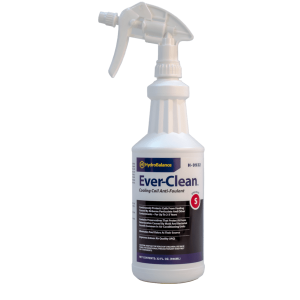
H-9932 - EVER-CLEAN COIL COAT (32 OZ)
SKU · H-9932$19.09View details → - In StockHydro-Balance
H-SG16 - FLUSH REFILL (1LB)
SKU · H-SG16$79.45View details → - In StockMainstream Engineering
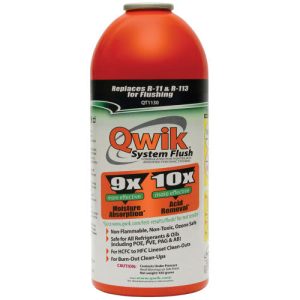
QT1130 - AEROSOL REFRIGERANT FLUSH (1LB)
SKU · QT1130$73.60View details → - In StockHydro-Balance
H-BD01 - BLUE COIL CLEANER (CONCENTRATE, 1 GAL, CONDENSER, BASE)
SKU · PRO-BLUE$25.78View details →