SOS-2 – FLOAT SWITCH
Do not replace a float switch that tripped - it did exactly the job you bought it for. Pull the trap and the cleanout tee, flush the line, and look for a flat or back-pitched run of PVC. Out of the pan, a good switch reads open when the float is lifted and closed when it hangs down, and that is the whole test. Shut off the breaker and the disconnect first. On attic units around Dallas, plan on flushing the drain every spring before the long cooling season loads it up.
10226 Plano Rd, Suite 104, Dallas TX 75238
Questions? Call or text (214) 340-9421
Mon–Fri 10 am – 7 pm | Sat 10 am – 3 pm
Condensate overflow safety switch, companion to the SOS-1 overflow switch. It opens the low-voltage control circuit when the drain line or pan backs up, shutting the equipment down before water damage occurs. No current manufacturer datasheet exists under this number, so contact rating, mounting style and reset behaviour are unconfirmed – verify before wiring.
Specifications from our own stock records. The manufacturer does not publish a public page for this item.
Specs
- TypeCondensate overflow safety switch
- FunctionOpens the control circuit on drain line or drain pan overflow
- ContactsNormally closed when dry - verify on the part
- Control voltageNot published - verify before wiring
- ResetNot confirmed
- Data SourceOTP stock record - not manufacturer-verified
What does a condensate float switch do?
It is a normally closed switch in the 24 volt control circuit that opens when water rises. The primary switch goes in the drain line at a tee or in the primary pan. The secondary sits in the emergency pan under an attic air handler. When it opens, the system stops making condensate before the pan overflows into your ceiling.
My AC quit in the middle of a hot week. Could this be it?
Very possibly, and on a Dallas attic unit it is one of the first things to check. Our cooling season runs most of the year, drains grow algae, and a slow trap or a flat run of PVC is all it takes. If the thermostat went blank, the switch is probably breaking R. If the blower runs and the outdoor unit does nothing, it is probably breaking Y.
Should mine break R or Y?
Breaking R shuts the system down and blanks the thermostat, so the problem gets noticed immediately and the coil stops sweating. Breaking Y stops the compressor but leaves the blower running, which in DFW humidity can re-evaporate pan water right back into the house. Most people here are better off breaking R. If you have more than one float switch, wire them in series.
Can I bypass it until I get the drain cleared?
No. Clear the drain. A jumper across a float switch is how a stained ceiling turns into a drywall job.
- In Stock
 Asurity
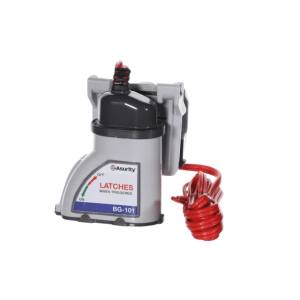
BG101 - FLOAT SWITCH (SECONDARY, PAN CLIP)
SKU · BG101$21.24View details → - In StockStandex
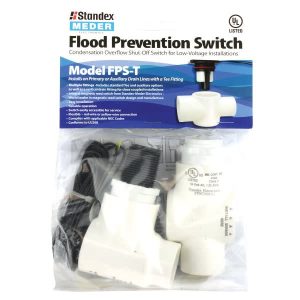
FPS-T - FLOAT SWITCH (INLINE TEE & ELBOW)
SKU · FPSC5001U$23.84View details → - In StockAsurity
BG-301 - FLOAT SWITCH (PRIMARY, ELBOW)
SKU · BG301$22.97View details → - In Stock
 Standex
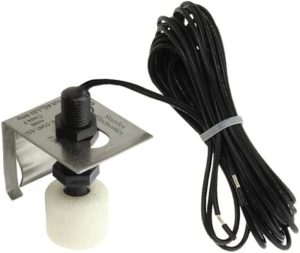
FPS-B - FLOAT SWITCH
SKU · FPS-B$14.50View details →