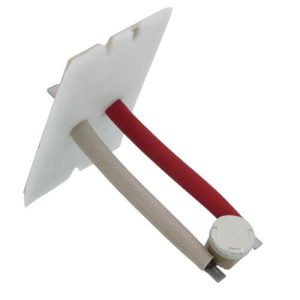
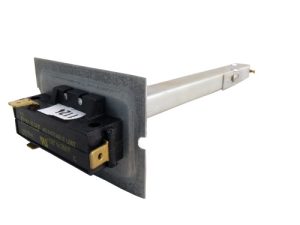
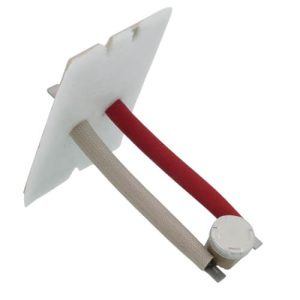
SHL508 – HIGH TEMPERATURE LIMIT SWITCH (3″, L190°)
If your high-limit switch tripped, find out WHY before just replacing it. 90% of trips trace back to restricted airflow (clogged filter, dirty blower wheel, closed-off supplies, undersized return), a failing blower motor, or a dirty heat exchanger. The switch is doing its job — it kept your furnace from overheating to the point of damage or fire. Match the L-rating EXACTLY (L150° won't replace L180° — wrong rating = nuisance trips or no protection). Bring the old switch in; we'll match disc size, L-rating, and base style at the counter.
10226 Plano Rd, Suite 104, Dallas TX 75238
Questions? Call or text (214) 340-9421
Mon–Fri 10 am – 7 pm | Sat 10 am – 3 pm
Symptoms of failure
- Furnace heats for a while then shuts down on its own
- Blower keeps running hard after the burners cut out
- Furnace will not fire at all and the board shows an open limit
- It started after a filter was left in too long
- Heat works, quits, then works again once things cool off
- Rollout or high-limit keeps needing a manual reset
Seeing these does not always mean this part is the culprit. Bring the old one in and we will meter it at the counter, free, before you buy.
If your furnace is short-cycling (turning on and off repeatedly), a failed limit switch may be the cause. This 3-inch high limit opens at 190°F and auto-resets at 170°F. Universal aftermarket replacement crossing to Carrier and Trane OEM numbers.
Specs: Opens at 190°F, closes at 170°F, auto reset, 3.12-inch insertion, SPST
Replaces: SHL508, C340056P04, HH12ZB190, SWT01259, SWT1259
Fits: Carrier/Bryant/Payne (HH12ZB190); Trane (SWT01259, TUD100C960H5). Fits other brands using a 3-inch L190 high limit.
Need help? See our Furnace Short Cycling Guide.
In stock at Open To Public HVAC Parts in Dallas. We test parts at the counter before you buy. Call or text (214) 340-9421.
Specs
- TypeHigh-temperature disc limit switch
- Trip TemperatureL508°F
- Disc Size3" disc
- OEM CompatibilityUniversal
Installing it yourself
- Power off at the furnace switch and confirm 0V.
- Photograph the position, the base shape and the two wire connections.
- Remove the mounting screws and pull the switch out.
- Match the OPEN temperature exactly (the L-number), the base style and the length. A hotter limit is not an upgrade, it is a hazard.
- Fit the new switch in the same location and orientation.
- Then find out WHY it opened - a dirty filter, a blocked return, a failing blower or a closed-off duct. The switch did its job.
- If you replace a limit and it opens again, stop and get the airflow looked at.
Power off at the disconnect first, every time. Not sure partway through? Bring it to the counter and we will walk it with you.
Cross-reference numbers
This part replaces the following OEM and aftermarket numbers:
- SHL508
Not sure if your number matches? Call (214) 340-9421 or bring the old part in — bench-testing is free.
Fits these models
- Universal aftermarket 3" or 7" disc high-temperature limit switch — fits most residential gas furnaces and air handlers with disc-style primary limit safety
- Common applications: Rheem RGRA/RGFD/RGLE, Goodman GMS/GMSS, Trane / American Standard, Carrier / Bryant, York / Coleman, Lennox
- Match the disc diameter (3" or 7"), L-rating, and base/mount style EXACTLY to your existing switch
What does L150° mean on a limit switch?
The L-rating is the trip temperature in Fahrenheit. L150° opens (breaks the safety circuit) when surface temp hits 150°F. Common ratings on residential furnaces: L120°-L260°. Match your equipment's data-plate spec EXACTLY — wrong rating = nuisance trips OR no protection.
Auto-reset vs manual-reset — which do I need?
Match what your equipment was designed for. AUTO-reset switches close back when temp drops below the reset point (convenient, but can hide developing problems). MANUAL-reset switches require pressing the button after each trip (safer because it forces you to investigate). Most furnace primary limits are auto-reset; secondary / rollout safeties are manual-reset.
Why does my limit switch keep tripping?
The switch isn't usually the problem — it's doing its job. Common root causes: clogged air filter (most common), dirty blower wheel, undersized return duct, closed-off supply registers, failing blower motor, slipping blower belt (older units), cracked heat exchanger, oversized burner. Diagnose the airflow / heat-source issue before just swapping the switch.
What's the difference between micro and 3"/7" disc?
"Micro" is a snap-disc style limit switch (small, ~1" diameter housing, common on modern furnaces). 3" / 7" refers to the disc diameter on older bimetallic limit controls and combo fan&limit units. Verify your existing switch's style + mount geometry before swapping; they are NOT interchangeable.
Can I jumper the limit switch?
NO. The limit switch is a safety device protecting against fire and heat-exchanger damage. Bypassing it can cause carbon monoxide buildup, melted ductwork, cracked heat exchangers, or worse. If yours trips, fix the airflow / heat-source cause.
How long should a limit switch last?
15-25 years typical. Most failures are caused by the underlying root cause (repeated over-temp cycles fatigue the bimetal disc) rather than the switch itself. Replace the air filter on schedule and the limit lasts.
- Low Stock
 Rheem
Rheem47-104990-04 - HIGH TEMPERATURE LIMIT SWITCH (3", ODD BASE, L150°)
SKU · 47-104990-04$34.19View details → - Low StockCarrier
HH12ZB150 - HIGH LIMIT SWITCH (3", L150°)
SKU · HH12ZB150$39.47View details → - Low Stock
 Supco
SupcoL597BA - ADJUSTABLE HIGH LIMIT SWITCH (7", 120-250)
SKU · L597BA$47.00View details → - Low StockUniversal
02532607000 - HIGH LIMIT SWITCH
SKU · 02532607000$31.99View details →