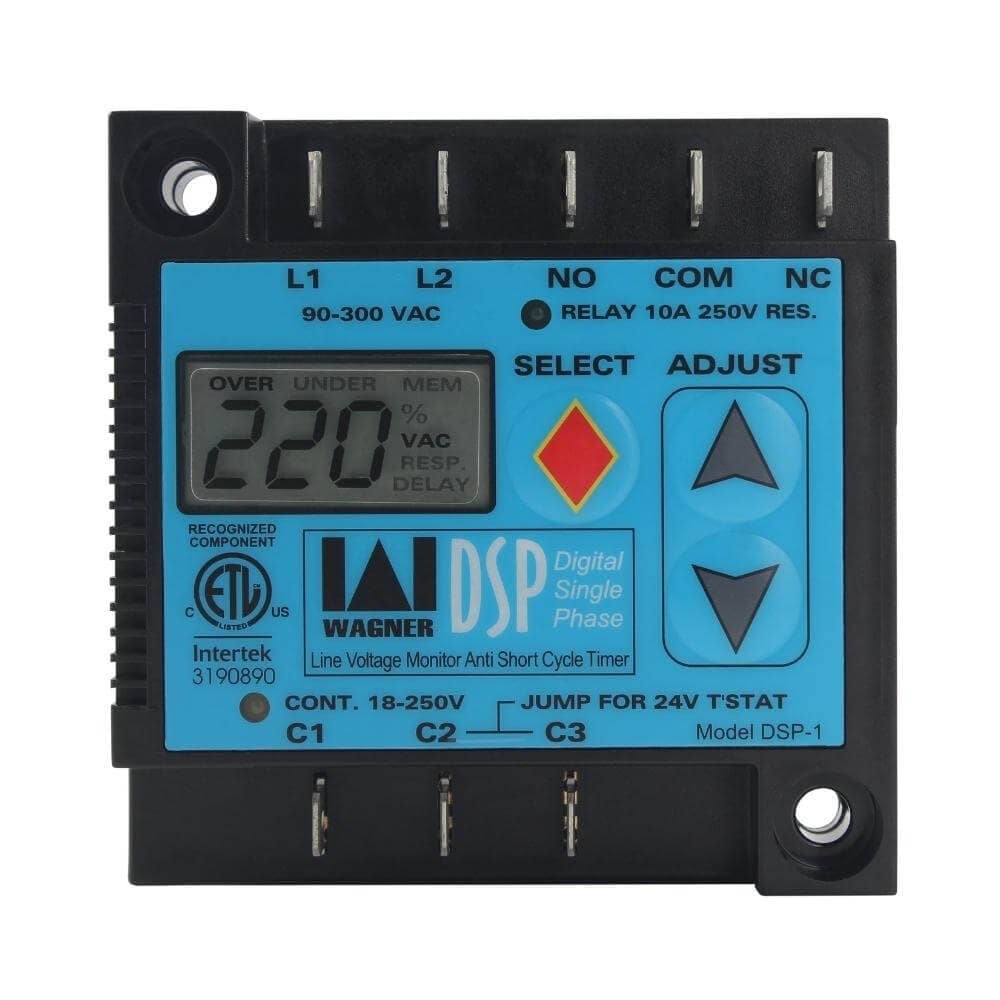
DSP-1 – SINGLE PHASE LINE VOLTAGE MONITOR MOTOR PROTECTOR
Wire it to the line side of the disconnect, never the load side. On the load side you lose all protection the moment somebody pulls the block to work on the unit. Keep the leads short and straight, land the green on the ground lug, then power up and look for the green status light. A dark or red status light means the MOVs are already spent and the device is protecting nothing. Check that light every spring, because in DFW they do get used up.
10226 Plano Rd, Suite 104, Dallas TX 75238
Questions? Call or text (214) 340-9421
Mon–Fri 10 am – 7 pm | Sat 10 am – 3 pm
DiversiTech Wagner digital single-phase motor protector that shields motors and appliances from damage caused by voltage surges and sags, blackouts and rapid restarts. The response timer and the restart delay timer are both adjustable so the device can be tuned to avoid nuisance trips and short-cycling after a power event.
Specifications published by the manufacturer. Source: manufacturer documentation.
Specs
- BrandWagner (DiversiTech)
- TypeDigital single-phase motor protector / line voltage monitor
- Protects againstVoltage surges, sags, blackouts and rapid restarts
- AdjustableResponse timer and restart delay timer
Where does an HVAC surge protector go?
Hardwired at the outdoor disconnect, on the line side, not the load side. Line side keeps it working even when somebody pulls the block for service. Leads land in parallel across L1 and L2 with the green on the ground lug, and keep them short and straight, because extra length adds inductance and slows the clamping response. Shut off the breaker and pull the disconnect before you open the box.
What ratings should I look at?
Two numbers. Surge current capacity in kA is how much energy it can soak up before it is used up, and 25kA to 50kA per mode is a reasonable residential range. Voltage protection rating is what it lets through, and lower is better. Then look for a status light. Green means the metal oxide varistors are intact. Dark, red or amber means they are spent and the device is now just a box on the wall.
Do I really need one in Dallas?
More than most places. DFW gets spring and summer storm activity plus heavy grid load across a cooling season that runs March into October, and utility switching transients come with that territory. An inverter or communicating system with a variable speed board is far more sensitive to transients than an old single-stage unit, and one of those boards runs several hundred dollars against a protector that costs a fraction of it.
Will it protect against low voltage or brownouts?
No, and that is the myth worth killing. A surge protective device clamps spikes going up. It does nothing about sagging voltage, single phasing, rapid short cycling or a welded contactor. Those call for a line voltage monitor or a compressor protection module, which is a different part on different terminals.
- Low Stock
 ICM
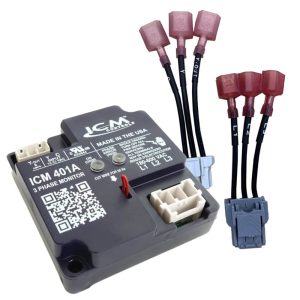
ICMICM401A - PHASE LOSS AND REVERSAL MOTOR PROTECTOR (LOW CONTROL VOLTAGE)
SKU · ICM401A$89.66View details → - Low StockWagner
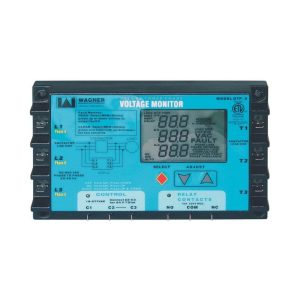
DTP-3 - THREE PHASE LINE VOLTAGE MONITOR MOTOR PROTECTOR
SKU · DTP-3$226.63View details → - Low Stock
 SoftStartHome
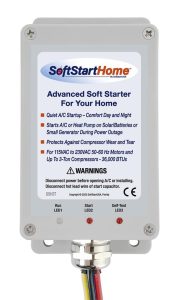
SSH3T - SOFT START KIT (UP TO 3 TON)
SKU · SSH3T$250.01View details → - In StockICM Controls
ICM517 - SURGE PROTECTOR
SKU · ICM517A$104.99View details →