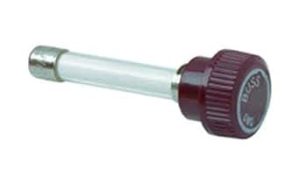
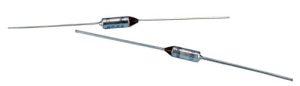
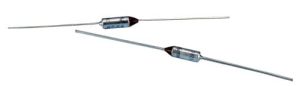
9-115-34-1 – FUSE LINK ASSEMBLY (FIRST CO, N951-1)
OEM fuse link assemblies are equipment-specific — match the exact part number to your unit. These are safety devices on First Co / Trane / specific-brand air handlers and heat kits. If yours blew, diagnose the root cause (airflow restriction, stuck relay, shorted strip) before installing the new one. Bring the old assembly + your unit model number to the counter.
10226 Plano Rd, Suite 104, Dallas TX 75238
Questions? Call or text (214) 340-9421
Mon–Fri 10 am – 7 pm | Sat 10 am – 3 pm
A thermal fuse link assembly that opens (blows) at 300°F to protect the system from overheating. This 25 Amp fuse link is a safety device in First Company HX coil units. If it has opened, the system had an overheating event — replace the fuse link and investigate what caused the overheating before restarting.
Specs: 25 Amp, opens at 300°F, ceramic body, stake-on terminals
Replaces: 9-115-34-1, N951-1
Fits: First Company HX coil units
In stock at Open To Public HVAC Parts in Dallas. We test parts at the counter before you buy. Call or text (214) 340-9421.
Specs
- TypeOEM fuse link assembly
- Type BehaviorOne-time use (replace after trip)
- OEM CompatibilityFirst Co
Cross-reference numbers
This part replaces the following OEM and aftermarket numbers:
- FIRST COMPANY
- 9-115-34-1
- N951-1
Not sure if your number matches? Call (214) 340-9421 or bring the old part in — bench-testing is free.
Fits these models
- OEM-specific fuse link assembly — direct factory replacement for First Co / Trane / equipment-specific applications
- Verify exact part number cross-reference to your unit before installing
- Bring the old assembly + unit model number to the counter
What does L333° mean on a temp fuse link?
The L-rating is the trip temperature in Fahrenheit. L333° trips at 333°F. Common ratings: L235°, L257°, L300°, L333°, L377°, L438°, L468°. Match your unit's data plate exactly — these are not interchangeable.
Why does my temp fuse link keep blowing?
On electric heat strips: usually restricted airflow — clogged filter, dirty blower wheel, undersized return, closed-off supplies. The strips overheat without enough air moving across them. On gas furnaces: usually flame impingement from a cracked heat exchanger, misaligned burners, or wrong manifold pressure. Fix the root cause; don't just keep swapping links.
One-time vs resettable — which do I need?
Look at what your existing link is. One-time ceramic / non-ceramic links are SAFETY devices designed to fail permanently — they're catastrophic-failure protection. Resettable breakers are convenience devices for short-cycling. They're NOT interchangeable; match what your equipment was designed for.
Can I bypass the fuse link with a jumper wire?
No. The fuse link is a safety device — bypassing it can cause fires, melted ductwork, CO production from incomplete combustion, or worse. If yours is blown, replace it. Period.
How do I tell if the fuse link is blown?
Use a multimeter on continuity / resistance mode. A healthy link reads near 0 ohms (closed circuit). A blown link reads infinite / OL (open circuit). Visual inspection helps too — blown links often have a visible gap or melted appearance.
- Low Stock
 Universal
ZRF05 - FUSE
SKU · ZRF05$14.99View details → - In Stock
 Supco
SupcoSTC4228 - TEMPERATURE FUSE LINK (L235°, 15A)
SKU · NTC227$5.37View details → - In StockSupco
STC4438 - TEMPERATURE FUSE LINK (L438°, 15A)
SKU · NTC438$5.37View details → - In Stock
 Supco
SupcoSTC5300 - CERAMIC TEMPERATURE FUSE LINK (L300°, STRAIGHT)
SKU · NTCD300$17.65View details →