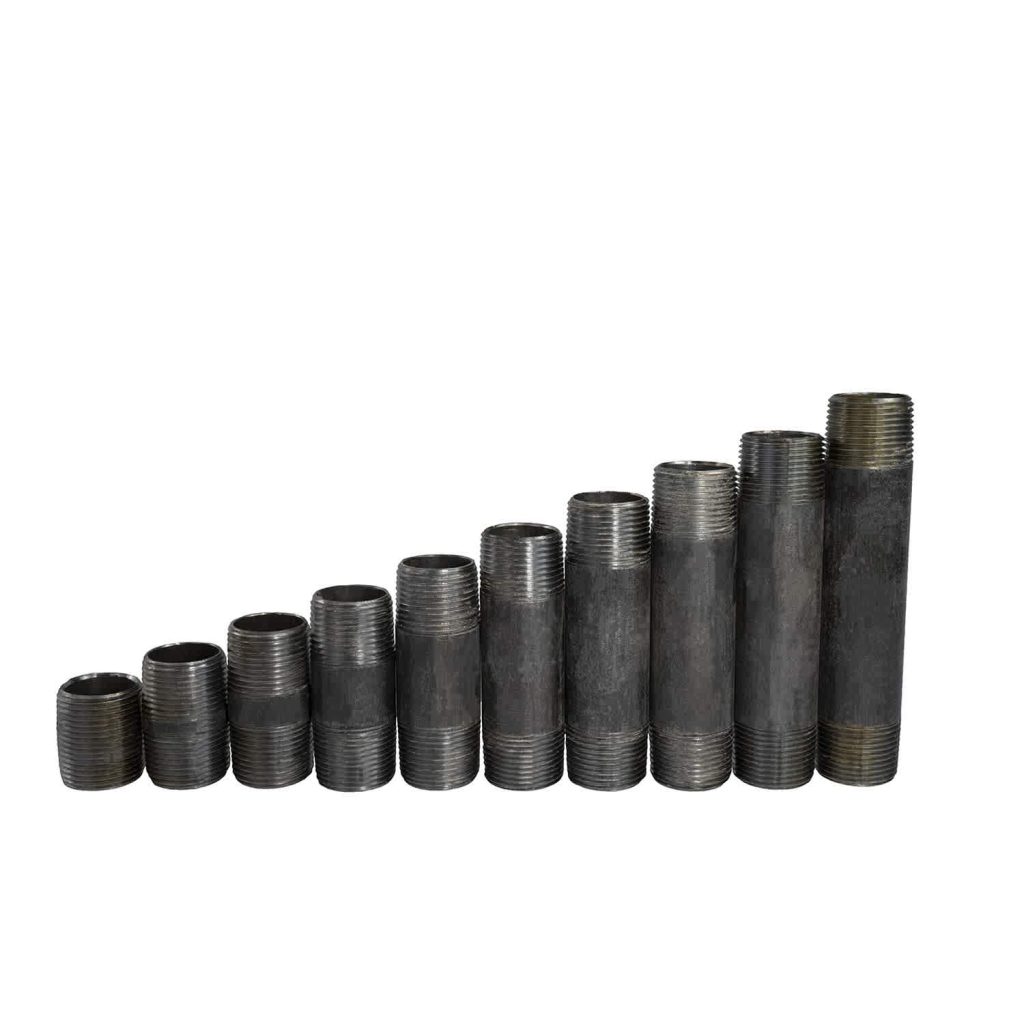
1/2BP36 – BLACK STEEL GAS PIPE (1/2″ x 36″ NIPPLE)
Size off the longest developed run in the house, not the distance to the one appliance you are adding. Add every elbow and tee as equivalent length, and when you land between two columns on the table, use the longer one. Atmos delivers around 7 inches of water column at the meter and you only get to spend about half an inch of it. Bring the nameplate BTU input of every appliance on that line plus a rough sketch, and we will walk the table with you at the counter.
10226 Plano Rd, Suite 104, Dallas TX 75238
Questions? Call or text (214) 340-9421
Mon–Fri 10 am – 7 pm | Sat 10 am – 3 pm
Black steel pipe nipple, 1/2 in. nominal pipe size by 36 in. long, threaded on both ends. Used for black iron gas piping runs, risers, drip legs and appliance drops where a cut-and-thread length is not practical. Black (uncoated) finish, the standard for fuel gas piping.
Specs
- TypeBlack steel pipe nipple
- Nominal Pipe Size1/2 in.
- Length36 in.
- End ConnectionsNPT threaded, both ends
- Material / FinishBlack steel, uncoated
- ApplicationFuel gas piping
Cross-reference numbers
This part replaces the following OEM and aftermarket numbers:
- SBAN4-360
- 0330219080
Not sure if your number matches? Call (214) 340-9421 or bring the old part in — bench-testing is free.
How do I size black iron for a furnace?
By BTU load and developed length, using the longest run in the house. Schedule 40 at 0.60 specific gravity and a 0.5 inch water column drop carries about 119 CFH in 1/2 inch at 20 feet, 249 CFH in 3/4 inch and 469 CFH in 1 inch. At 60 feet those fall to roughly 66, 137 and 259. Natural gas runs about 1,000 BTU per cubic foot, so 3/4 inch at 60 feet developed length is good for around 137,000 BTU. Developed length means measured length plus the equivalent length of every elbow, tee and valve, and if you land between two columns you take the longer one.
Which sealant goes on the threads?
One rated for fuel gas. The code language is that the joint compound has to be resistant to the action of the gas, which rules out the thin white plumbing tape. Use gas-rated pipe dope or yellow gas-rated PTFE tape, male thread only, started a thread or two back so nothing squeezes inside and lands in a gas valve.
How do I leak test?
Pressure test first, then soap. The fuel gas code calls for 1-1/2 times working pressure and never less than 3 psig, held at least 10 minutes, and plenty of DFW cities want longer - ask your inspector before you pump it up. Once it holds, brush soap solution on every joint and watch. A lighter is not a leak detector.
Is CSST the same as black iron?
No, the rules are different. CSST uses only its own manufacturer's fittings, has its own sizing tables, and requires bonding to the grounding electrode system per the manufacturer's instructions. Never mix fitting brands and never treat a CSST run like rigid pipe.
- In Stock
 Smith Cooper International
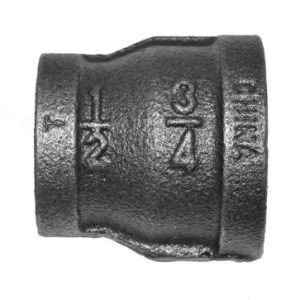
1/2-3/4BPRED - GAS PIPE (3/4-1/2" BUSHING)
SKU · 3412RED$3.39View details → - In Stock
 Venti
Venti1/2BPTEE - BLACK STEEL GAS PIPE (1/2" TEE)
SKU · 1/2BPTEE$2.54View details → - In StockVenti
1/2BP90ST - BLACK STEEL GAS PIPE (1/2" STREET ELBOW)
SKU · 1/2BP90ST$2.44View details → - In StockVenti
1/2BP1.5 - BLACK STEEL GAS PIPE (1/2" x 1.5" NIPPLE)
SKU · 1/2BP1.5$1.96View details →