Why Capacitors Die First in DFW Heat (And How to Replace One Yourself)

Walk into our store any week between May and September and you’ll see the same conversation playing out at the counter: someone’s AC stopped working in the heat, they got quoted $300–$600 by a service company to “diagnose and repair,” and they’re standing here with a $25 capacitor in their hand wondering why nobody told them this could be a 10-minute fix.
Capacitors are the #1 reason residential AC units stop working in DFW. They’re also one of the easiest parts to diagnose, the cheapest to replace, and the most overcharged-for repair in the HVAC industry. Here’s what you need to know.
What a Capacitor Actually Does
The dual-run capacitor on your outdoor unit is a small cylindrical part — usually round, about the size of a soup can — that stores electrical charge and releases it in a burst to start your compressor and outdoor fan motor, and then helps run them efficiently after start-up. Without it, your AC is dead. Compressor won’t kick on, fan won’t spin, no cooling.
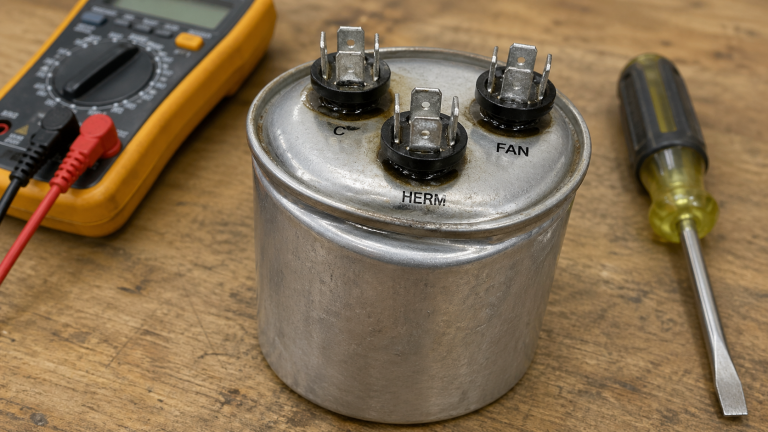
“Dual-run” means it serves two motors with one part: the compressor (typically the larger µF rating, 35–60 µF) and the fan (smaller, 5–7.5 µF). Most residential units use a 40+5, 45+5, 55+5, or 60+5 rating.
Why DFW Heat Kills Them Faster Than the Spec Sheet Promises
Capacitors are rated for a specific number of charge cycles at a specific temperature. The cabinet of your outdoor unit in July can hit 130°F+ internal — well above the rated operating temp on most consumer-grade caps. Heat dries out the electrolyte inside the capacitor faster, and once it’s degraded the µF capacity drops below the threshold needed to start the compressor.
Manufacturers spec a 5–10 year lifespan. In DFW that’s optimistic. We see capacitors fail at 4–6 years on systems that run hard through Texas summers, especially on units sitting in full afternoon sun.
How to Tell If Your Capacitor Is the Problem
Common symptoms of a failing capacitor:
- AC clicking but won’t start. The contactor is engaging, but the compressor can’t start because there’s no charge boost. Full diagnostic here.
- Outdoor fan won’t spin. You can sometimes “push start” it with a stick, and it’ll run for a while — that’s a textbook bad capacitor. More here.
- Humming sound from the unit. Compressor is trying to start but failing.
- Visible bulging or leaking. Pop the access panel and look at the top of the capacitor. If it’s domed up or oily, it’s done.
- System short-cycling. Starts, runs briefly, shuts off, repeats.
Test It Yourself in Five Minutes
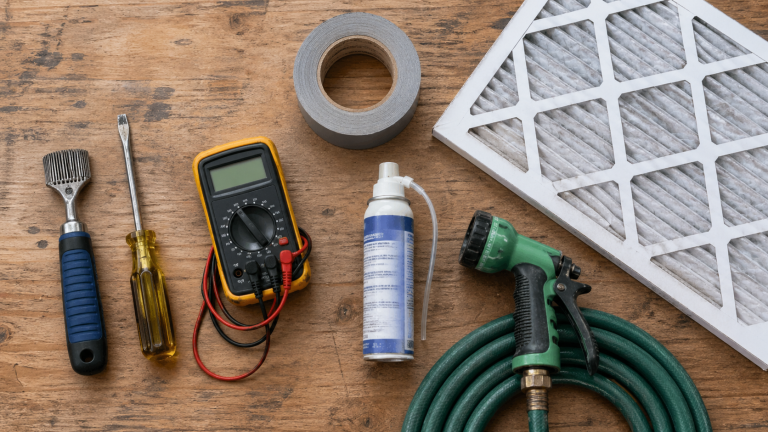
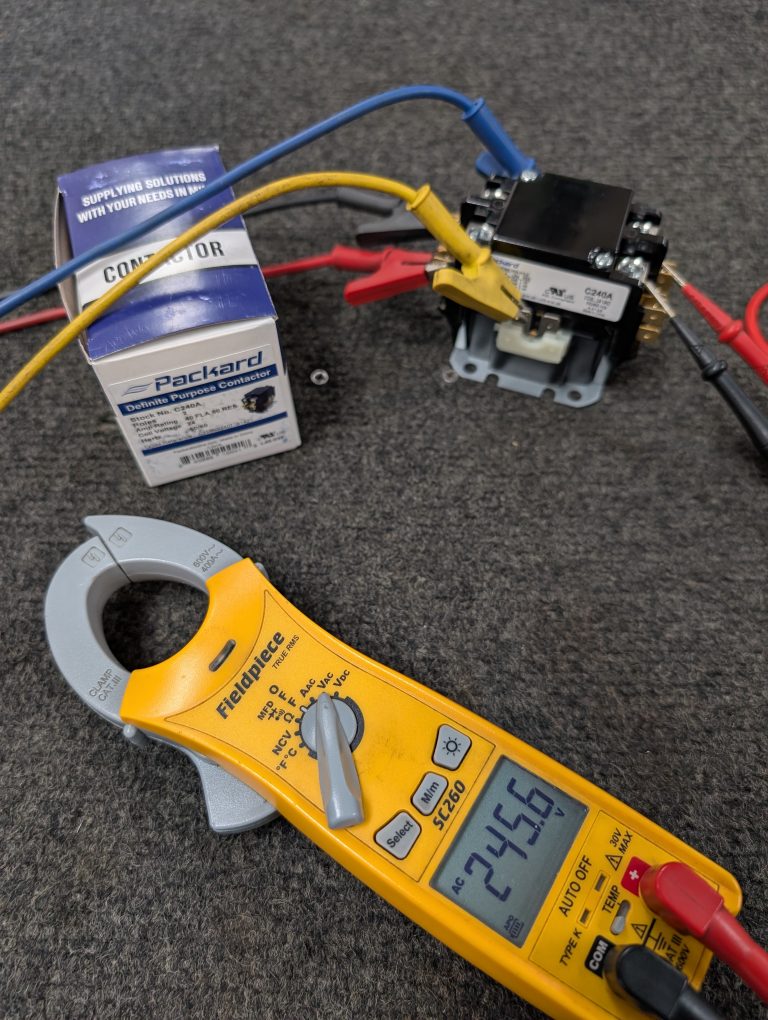
You need a multimeter with a capacitance (µF) setting — about $30 at any home improvement store, and useful for a hundred other things.
- Turn off power to the outdoor unit at the breaker AND the disconnect (the metal box mounted on the wall next to the unit).
- Remove the access panel cover (usually 4–6 screws).
- Discharge the capacitor before touching it by shorting the terminals with an insulated screwdriver. Capacitors hold a charge even with power off — this is the only step you can’t skip.
- Disconnect the wires (note where each one goes — take a photo).
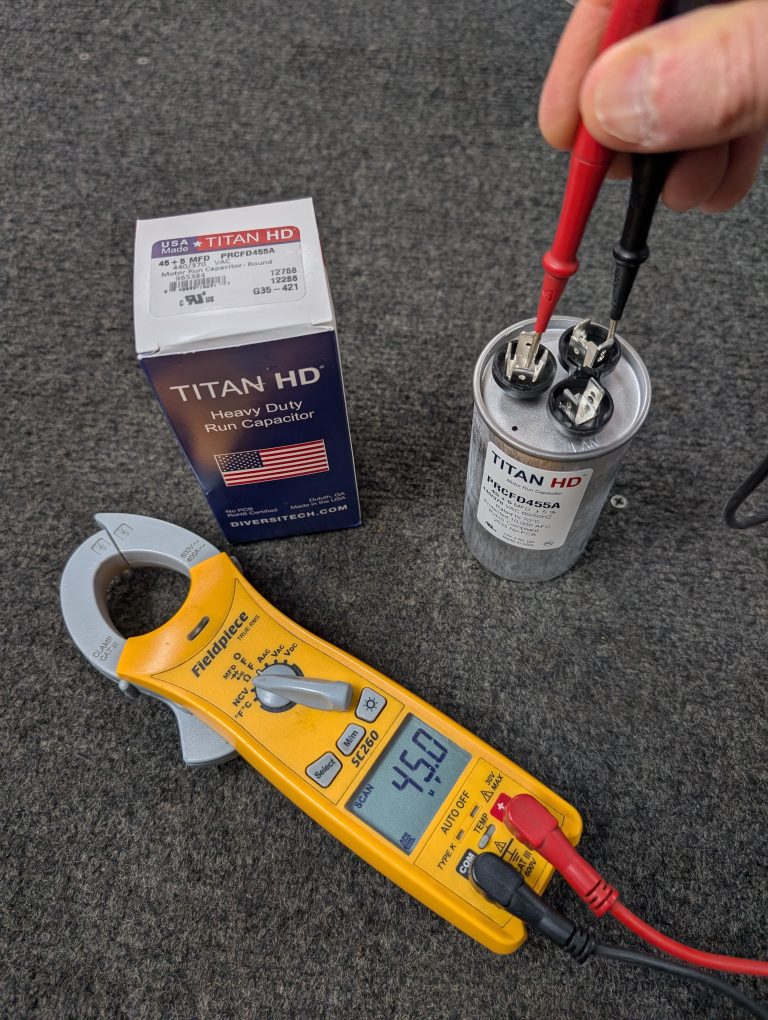
- Touch your meter probes to the C+HERM and C+FAN terminals separately. Compare the reading to the printed spec on the capacitor.
- If the reading is more than 6% off the printed spec, replace it.
Or skip the testing — bring the suspect capacitor to our counter and we’ll test it free on the spot. Most people who walk in with a “dead” capacitor leave with a $25 replacement and an HVAC system back online by lunchtime.
How to Pick the Right Replacement
Match three things to the original:
- µF rating — both the compressor side and the fan side. A “45+5” capacitor is 45 µF for the compressor and 5 µF for the fan. Don’t substitute different values.
- Voltage rating — usually 370V or 440V. You can always go up (440V is fine on a 370V system), never down.
- Configuration — round vs. oval matters only for fitment in the bracket.
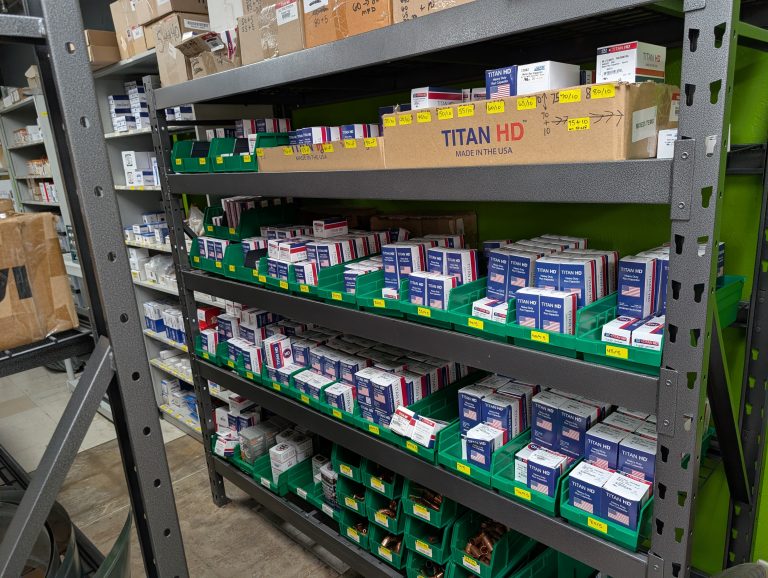
The brand of the capacitor doesn’t matter much for residential use — a 45+5 from any major manufacturer works the same as a Rheem-branded 45+5. We stock standard sizes for every common DFW residential system.
What This Saves You
HVAC service companies in DFW typically charge $80–$150 just to show up, then $250–$500 to “replace a capacitor.” The capacitor itself costs us about $15 wholesale and we sell them for $25–$45 retail.
If you can use a screwdriver and a multimeter, you can replace one in under 30 minutes. We’ve taught hundreds of homeowners how to do it at our counter — it’s the single most empowering DIY HVAC repair you can learn, and it’ll pay for the multimeter on the first repair.
Walk in or call (214) 340-9421. We test free, match the right size, and walk you through installation. Spanish guide here.