Spring AC Tune-Up Checklist Before May Heat (DIY)

By the time the first 90° day hits Dallas in late April or early May, your AC has been sitting idle for six months and your indoor coil is probably caked with whatever your filter missed last summer. Spring is when smart DIYers spend an hour preventing the July breakdown they’d otherwise be paying $400 to fix at midnight.
This is the real-deal checklist — what an HVAC tech would do on a $150 spring tune-up visit, minus the upsell. Most of it takes a screwdriver, a hose, and 60 minutes.
1. Replace the Air Filter
Easiest thing first. A dirty filter restricts airflow, freezes the indoor coil, kills the blower motor, and forces the compressor to work harder — every single major summer failure traces back to bad airflow at some point.
Pleated MERV 8 or MERV 11 filters are the sweet spot for residential systems. MERV 13+ filters are great for allergies but restrict airflow on systems not designed for them. Replace every 60–90 days during heavy use.
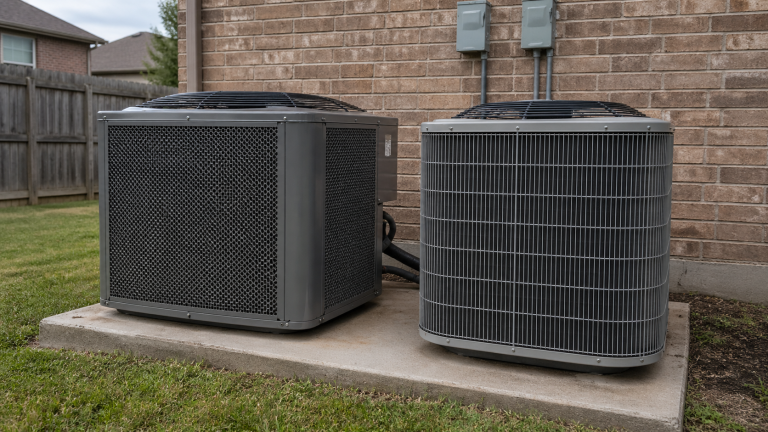
2. Hose Off the Outdoor Coil
Cut power at the disconnect. Remove the top grille if your unit has one (4–6 screws). Spray the condenser fins from the inside out using a regular garden hose — no pressure washer (it’ll bend the fins). Spring pollen, leaves, and dust accumulate on the coil over winter and absolutely murder cooling efficiency.
While you’re in there, look for: bent fins (use a fin comb to straighten), debris around the base, animal nests inside the cabinet (we’ve seen everything from squirrels to wasps).
3. Test the Capacitor
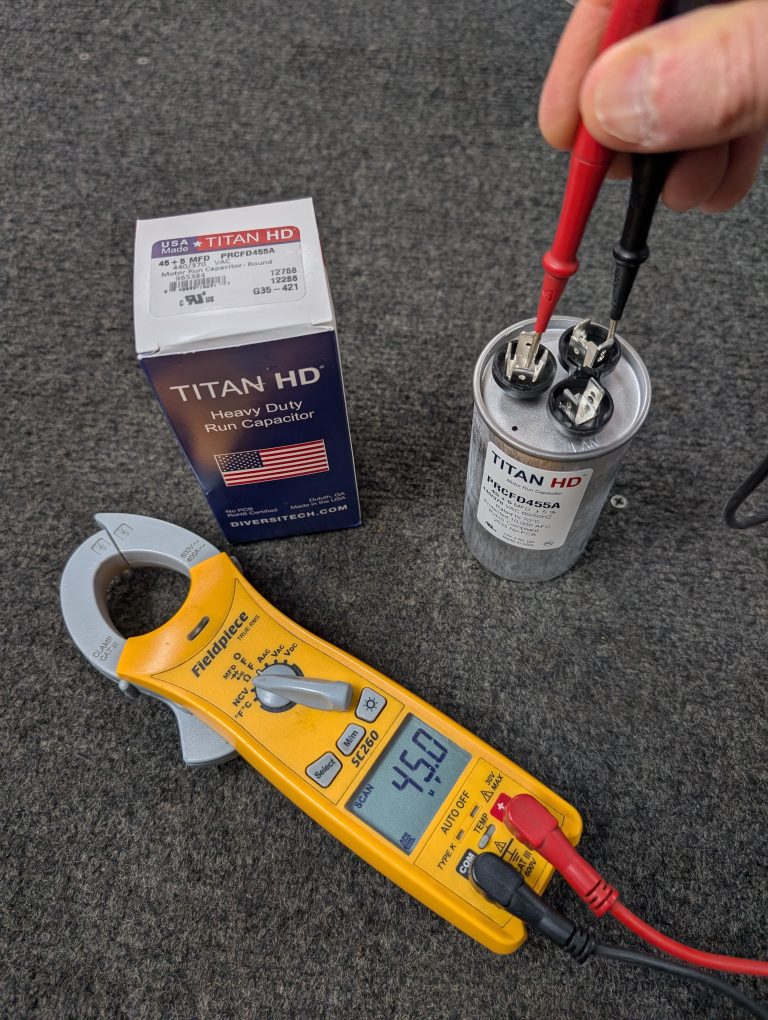
This is the make-or-break check. The capacitor is the #1 summer failure point in DFW. Testing it now — when it’s 75°F outside instead of 105°F — gives you time to replace it before it strands you.
You need a multimeter with a µF setting. Discharge the capacitor (short the terminals with an insulated screwdriver) before touching the leads. Read both sides — compressor and fan. If either is more than 6% off the printed spec, swap it. Free testing at our counter if you don’t have a meter.
4. Inspect the Contactor
Pop the electrical access panel. The contactor is the relay that powers the compressor — looks like a small box with two large terminals on top. Look for:
- Pitted or burned contact points (you can see them when the contactor is open)
- Buzzing or humming sound when the system runs
- Visibly black or burned wire ends connected to the terminals
Contactors run $20–$40 and replacement is straightforward — pull old, swap wires onto matching terminals on new, screw it down. Spanish walkthrough.
5. Check the Drain Line
Your indoor coil drips condensate into a drain pan, which drains out through 3/4″ PVC to a termination point (usually outside or to a floor drain). When this clogs — and it will — water backs up, trips the float switch, and your AC stops cooling.
Find the drain line cleanout (a vertical PVC tee with a cap, usually near your indoor unit). Remove the cap and pour a cup of distilled white vinegar in. Or use a wet/dry vac on the outdoor termination point to suck out any algae buildup.
6. Listen to the Indoor Blower
Turn the system to FAN ON (not auto). Listen at the air handler or furnace cabinet. Should be a smooth, constant whoosh. Not normal: rattling, grinding, intermittent stopping, screeching. Bad bearings or a failing capacitor on the blower motor are common in 5+ year old systems.
7. Verify Thermostat Calibration
Set the thermostat to 70°F. After 30 minutes of runtime, check actual room temperature with a separate thermometer. If they’re more than 3°F off, recalibrate or replace the thermostat — drift this much usually means a 10+ year old mercury-bulb stat that’s finally giving up.
8. Open Up the Indoor Coil Access (Optional)
If you’ve got a non-cased coil with screws-only access, peek inside. A coil that’s caked with dirt is a common cause of weak cooling. Cleaning it requires a foaming coil cleaner ($15) and patience. Skip this step if you don’t feel comfortable opening the cabinet.
9. Verify Refrigerant Charge — Sort Of
This requires gauges and EPA 608 certification to do correctly. The DIY substitute: feel the suction line (the larger insulated copper line going into the outdoor unit) when the system is running on a hot day. It should be cool to the touch — about 40–55°F. If it’s warm or unevenly cool, you may have a low charge or restriction. Time to call somebody, or bring photos to the counter for a sanity check.
10. Stock the Spares Cabinet
If your system is more than 5 years old, the most cost-effective insurance against a 9 PM breakdown in July is keeping the right spares on the shelf:
- Matching capacitor (your µF rating, 440V)
- Contactor (24V coil, matching amperage)
- Two air filters of your size
- Bottle of foaming coil cleaner
Total parts inventory: about $80. The day a $25 capacitor strands you in 105° heat, you’ll be glad you bought it ahead of time instead of paying after-hours emergency rates.
When to Stop DIY-ing and Buy New
If your system is on R-22 refrigerant, the compressor is shot, you’ve got a coil leak, or anything is seized — DIY tune-ups won’t save it. R-22 is no longer manufactured and recovered cylinders run $300+ per pound. At that point, a complete Rheem system replacement is cheaper than the repair. Most of our equipment customers are people who tried to fix an R-22 system and got the math wrong.
Walk in any time we’re open or call (214) 340-9421. We test parts free, stock everything in this checklist, and we won’t sell you something you don’t need.