Texas Hail Damage to HVAC: What’s Covered and What to Check

Spring storms in DFW are a coin flip — half the time it’s a quick downpour and half the time it’s golf-ball hail at 2 AM that wakes the whole neighborhood. By morning, your roof has dents, your car has dimples, and your outdoor AC condenser may or may not have damage you can’t see from the driveway.
Here’s how to tell what’s actually damaged, what insurance typically covers, and how to prevent the same damage next storm.
What Hail Actually Damages on an HVAC Condenser
The vulnerable part is the condenser coil — the silver fins wrapped around the outer perimeter of the outdoor unit. These fins are aluminum, paper-thin, and absolutely critical to heat transfer. Damaged fins mean your AC can’t dump heat efficiently, which means longer run times, higher electric bills, and a compressor working harder than it should.
Hail damage on an outdoor condenser comes in three flavors:
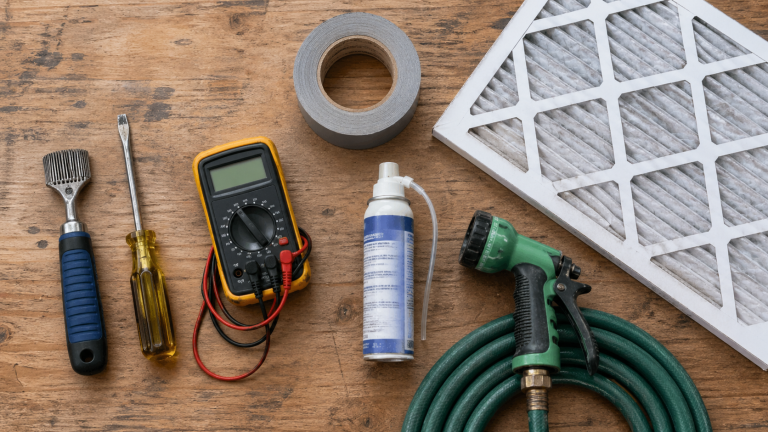
- Bent fins — most common. Hail flattens or folds the aluminum fins inward, blocking airflow. You can fix this with a fin comb (about $10).
- Punctured fins — softball-sized hail can actually rip through the fin pack. Less common but worse — replacing the coil itself is usually a $1,500+ repair.
- Cabinet damage — large dents in the sheet metal cabinet are mostly cosmetic but can affect resale value if you sell the home.
Why Rheem Has an Advantage Here (Hailguard)
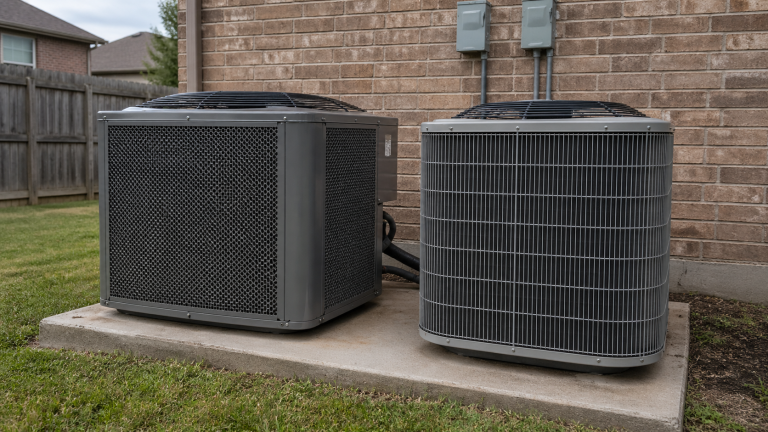
Most major brands offer hail-protection grilles as an upsell — a metal mesh that wraps the perimeter of the condenser to take the hit before it reaches the fins. Rheem includes hailguard as standard on every condenser they make. Goodman and Carrier base models don’t have it. Payne and Bryant base models only have wire guards (much less effective than mesh).
This matters in Texas more than almost anywhere else in the country. DFW averages 4–6 hail events per year, and the Insurance Information Institute consistently ranks Texas as the #1 state for hail damage claims. If you’re buying a new system, the hailguard alone is worth the brand decision in this climate. More on the Rheem advantage here.
How to Inspect Your Unit After a Storm
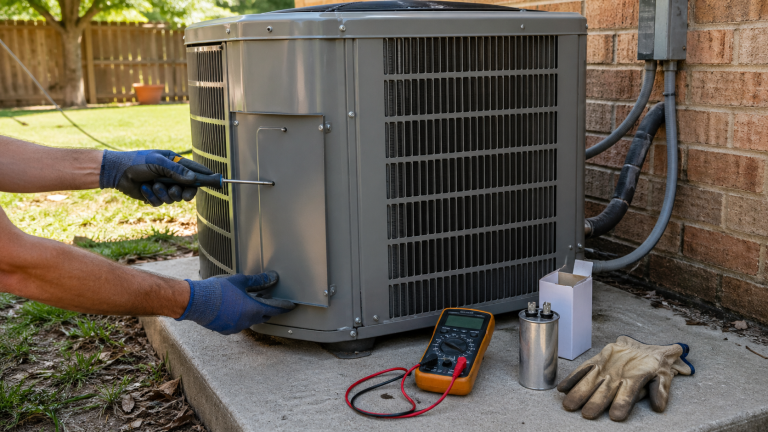
Cut power at the disconnect first. Then walk around the outdoor unit and look at all four sides:
- Look for visible bent or flattened fins. Compare to a neighbor’s unit if you’re not sure what “normal” looks like.
- Run your hand lightly along the fin pack (carefully — those edges are sharp). Smooth patches mean the fins are flattened.
- Check the top grille. Larger hail can dent the fan grille and even bend the fan blades.
- Look for impact marks on the cabinet. Indicates how hard the storm hit.
- Power on and listen. Bent fan blade = wobble, vibration, or rubbing sound.
Repair vs. Replace
Light to moderate fin damage: combable. A fin comb runs $10 at our counter and an hour of careful work restores most airflow. Affordable DIY fix.
Heavy fin damage across multiple sides: usually means the coil needs replacement. At that point you’re often better off replacing the entire condenser, especially if it’s 8+ years old. We stock matching condensers for most major brands.
Cabinet only: cosmetic. Doesn’t affect function. Insurance often covers replacement for aesthetic reasons, but you can also leave it.
Insurance — What Most Texas Homeowner Policies Cover
Most Texas homeowner policies cover hail damage to the outdoor HVAC unit as part of “other structures” or “dwelling” coverage. Standard coverage includes:
- Coil replacement when damage is severe
- Cabinet replacement for cosmetic damage
- Full unit replacement when repair cost exceeds replacement
What insurance typically does NOT cover: gradual wear and tear, hail damage from before your policy started, or damage made worse by failure to file promptly. Document immediately with photos, file within 30 days of the storm, and get an itemized estimate before agreeing to any settlement.
Important: insurance adjusters often quote the “actual cash value” of an old condenser, which can be 30–50% less than replacement cost. If your policy has Replacement Cost Value (RCV) coverage, push for full replacement. We can give you a written quote for matching equipment to support your claim.
Preventing the Next One
- Aftermarket hail covers — fabric or mesh covers that wrap the condenser when not in use. Cheap, effective for stored units. Don’t leave on while running.
- Hail screens or guards — permanent mesh installations that stay on year-round. About $80–$150 installed. Reduces fin damage significantly.
- Move the unit if possible — north-facing or covered locations get less direct hail exposure.
- Pre-storm inspection routine — when severe weather is forecast, throw a tarp over the condenser. Remove before next operation.
If You’re Replacing After Major Damage
Hail damage that totals a condenser is often the cheapest opportunity to upgrade to a higher-efficiency, R-454B-compatible system. Insurance pays out the actual cash value of your old unit; you pay the difference for the upgrade. If your old unit was R-22 or pre-2010 R-410A, this is the moment to switch to a current-spec system.
Walk in or call (214) 340-9421 for help with insurance claims, fin comb selection, or matching a replacement condenser. We’ll write you a quote for insurance documentation and won’t pressure you into something you don’t need.