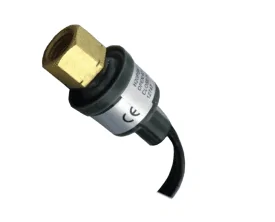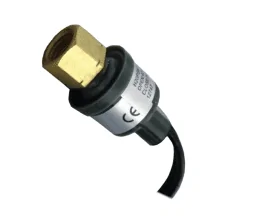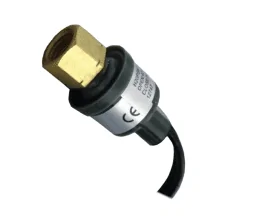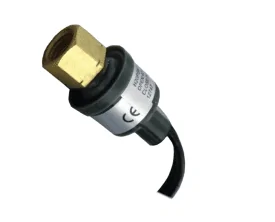
SHP450250 – REFRIGERANT HIGH PRESSURE SWITCH (OPEN @ 450 PSI)
High-pressure refrigerant switches protect the compressor and condenser from over-pressure conditions -- typically caused by a dirty condenser coil, failed condenser fan, or overcharge. If yours keeps tripping, clean the coil (pressure-wash it), verify the fan motor is running at correct RPM, and check refrigerant charge before just replacing the switch. **Refrigerant pressure switches are interchangeable across brands and systems** as long as the new switch is within 10-20% of the original pressure rating and has the same mechanical connection style (screw-on vs braze-in). So a 450 PSI OEM switch can be replaced by a 425-475 PSI aftermarket switch of the same connector style.
10226 Plano Rd, Suite 104, Dallas TX 75238
Questions? Call or text (214) 340-9421
Mon–Fri 10 am – 7 pm | Sat 10 am – 3 pm
A high-pressure switch protects your compressor by shutting the system down if refrigerant pressure gets too high. If your AC keeps shutting off on hot days or after running a short time, a faulty high-pressure switch could be the cause — or it could be doing its job and flagging another problem.
Specs: Opens at 450 PSI, closes at 250 PSI, 1/4″ SAE female flare fitting, automatic reset
Replaces: PHP450250, SHP450250
Fits: Universal — works with most residential and commercial HVAC and refrigeration systems
Need help? See our Furnace Short Cycling Guide.
In stock at Open To Public HVAC Parts in Dallas. We test parts at the counter before you buy. Call or text (214) 340-9421.
Specs
- TypeRefrigerant high-pressure cutout switch
- Open Pressure450 PSI
- Connector1/4" spade terminals
- ResetAutomatic (closes when pressure returns to normal)
- OEM CompatibilityUniversal
Cross-reference numbers
This part replaces the following OEM and aftermarket numbers:
- PHP450250
- SHP450250
Not sure if your number matches? Call (214) 340-9421 or bring the old part in — bench-testing is free.
Fits these models
- Universal refrigerant high-pressure cutout switch — protects compressors and condensers from over-pressure conditions (dirty coil, failed fan, overcharge)
- Fits any system whose data plate calls for the matching open-pressure spec (425/450/600 PSI)
- Verify your refrigerant type — R-410A and R-32/R-454B systems run different pressures
My low-pressure switch keeps tripping -- what's wrong?
Low-pressure trips almost always = low refrigerant charge (slow leak), restricted suction line (kink, clogged drier, frozen evaporator), or wrong superheat. Hook up gauges, verify charge AND superheat against the data plate. Just replacing the switch won't fix anything if the charge is low.
My high-pressure switch keeps tripping -- what's wrong?
High-pressure trips = dirty condenser coil (most common), failed condenser fan motor, overcharge, or non-condensables in the system. Clean the coil with a pressure washer, verify fan RPM, recover and weigh-in factory charge. Switch is usually fine.
What's the difference between open-at and close-at pressure?
A low-pressure switch with "OPEN @ 50 PSI" trips out (opens the safety circuit) when suction pressure falls to 50 PSI. The close-pressure is higher (system has to recover before restart). High-pressure works the opposite way -- opens at high pressure, closes when it drops back.
Can I replace a 50-PSI switch with a 40-PSI switch?
Yes, usually. Refrigerant pressure switches are interchangeable across brands and systems as long as the new switch is within 10-20% of the original pressure rating and has the same mechanical connection style. 40 PSI is 80% of 50 PSI (within 20%), so it'll work for most applications. If you're going further than that (e.g., a 40 PSI switch replacing a 60 PSI switch), verify against the system's design envelope.
What about connection style?
The mechanical connection has to match -- screw-on switches use a Schrader-style port; braze-in switches solder directly into the suction or discharge line. You can't swap between these two styles without changing the port fitting.
How do I test a refrigerant pressure switch?
Hook up gauges. With the system off (pressures equalized), the switch should read OPEN if pressure is in the trip range, CLOSED otherwise. Use a multimeter on the switch terminals for continuity. Bring it in and we'll bench-test free.
- Low Stock
 Universal
SLP4560 - REFRIGERANT LOW PRESSURE SWITCH (OPEN @ 45 PSI)
SKU · PLP4560$32.05View details → - Low Stock
 Universal
SLP3560 - REFRIGERANT LOW PRESSURE SWITCH (OPEN @ 35 PSI)
SKU · PLP3560$32.05View details → - Low Stock
 Universal
SLP2565 - REFRIGERANT LOW PRESSURE SWITCH (OPEN @ 25 PSI)
SKU · PLP2565$32.05View details → - Low Stock
 Universal
SLP4080 - REFRIGERANT LOW PRESSURE SWITCH (OPEN @ 40 PSI)
SKU · PLP4080$32.05View details →